Gvido Graciano
 Italy
Italy- Guido di Graziano: A Respected Sienese Master
- Documented Success in Siena
- 10 lire for a "Maesta" in the Palazzo comunale on October 28th
- Surviving Works
- "Madonna and Child Enthroned" (1285-95, Church of San Regolo, Siena)
- Illuminator and Beyond
- Chronology and Legacy
Guido di Graziano: A Respected Sienese Master
Guido di Graziano was not an avant-garde artist like Coppo di Marcovaldo or Guido da Siena. Nevertheless, as their contemporary, he was a skilled craftsman in the "second rank" who received numerous commissions in Siena.
Documented Success in Siena
Guido's name appears frequently in the records of the Biccherna, the city's treasury. In 1295 alone, he was paid substantial sums:
15 lire for a fresco of the "Virgin in Majesty" in the Palazzo comunale on August 27th
10 lire for a "Maesta" in the Palazzo comunale on October 28th
6 lire and 10 soldi for a fresco of Saints Peter and Paul and 102 gold letters beneath the Virgin on November 15th
These commissions demonstrate Guido's reputation as a well-respected and highly paid artist.
Surviving Works
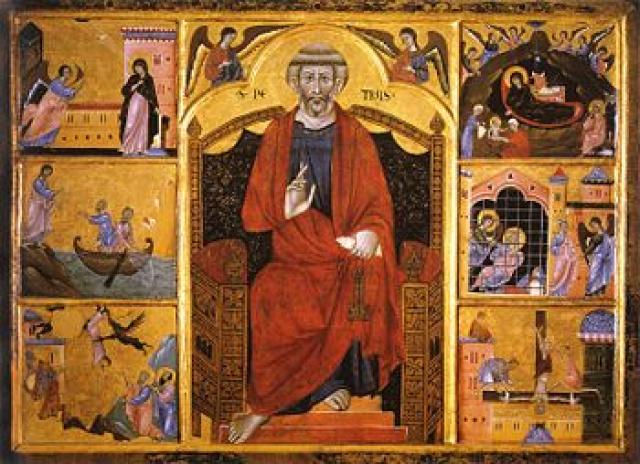
Guido di Graziano's known works include:"Saint Peter Enthroned with Gospel Scenes" (Siena Pinacoteca)
Altar panel of "Saint Francis and Scenes from His Life" (post-1270, Siena Pinacoteca)
"Madonna and Child Enthroned" (1285-95, Church of San Regolo, Siena)
All display strong Byzantine influences, blended with Sienese innovations in facial expressions, attributed to his training with Guido da Siena and Coppo di Marcovaldo.
Illuminator and Beyond
Guido di Graziano was also an accomplished miniaturist. His illustrations adorn the "Treatise on the Creation of the World" (end of the 13th century - early 14th century) in the Civic Library of Siena.
Chronology and Legacy
Exact dates of Guido's birth and death are unknown. Based on the Biccherna records, his career spanned from the 1270s into the early 14th century. While not a groundbreaking innovator, Guido di Graziano's contributions to Sienese art were significant, earning him recognition as a respected master of his era.