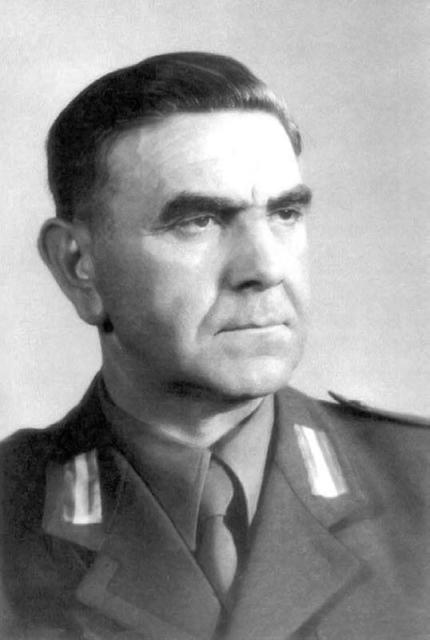
Ante Pavelic
 Croatia
Ante Pavelić was a Croatian fascist politician who led the Ustaše movement and ruled the Axis-backed Independent State of Croatia during World War II. His government imposed racist laws and carried out mass persecution and murder of Serbs, Jews, Roma and political opponents.
Political beginnings
Pavelić was born on July 14, 1889, in Bradina, then part of Austria-Hungary and now in Bosnia and Herzegovina. He studied law in Zagreb, earned a doctorate in 1915 and worked as a lawyer. He entered politics through the Croatian Party of Rights and became a prominent advocate of Croatian nationalism.
After the establishment of the Kingdom of Serbs, Croats and Slovenes, Pavelić opposed the central government and turned to increasingly militant politics. In 1929, he founded the Ustaše, an extremist nationalist organization that used violence and terrorism. Ustaše members took part in the 1934 assassination of Yugoslav King Alexander I in Marseille, carried out in cooperation with Macedonian militants. Pavelić spent years in exile and was imprisoned in Italy.
Wartime rule and persecution
Following the German invasion and partition of Yugoslavia in 1941, the Ustaše established the Independent State of Croatia (NDH), a fascist state dependent on Nazi Germany and Fascist Italy. Pavelić returned and became its leader, known by the title *Poglavnik*. The regime swiftly enacted racial laws modeled in part on Nazi legislation and pursued an explicitly violent project to reshape the population.
Under Pavelić’s rule, Ustaše authorities persecuted and killed Serbs, Jews and Roma, as well as political opponents and anti-fascists. They deported Jews to Nazi camps and operated a network of concentration camps, including Jasenovac. The regime’s mass violence was brutal and often carried out by its own forces. Its crimes formed part of the Holocaust and genocide against Serbs and Roma in the NDH.
Exile and death
As the Axis powers collapsed in 1945, the NDH fell and Pavelić fled. He escaped through Austria and Italy and eventually reached Argentina, where he continued political activity among Croatian émigrés. After being seriously wounded in an assassination attempt in 1957, he moved to Spain. He died in Madrid on December 28, 1959, without facing trial for his wartime leadership.
Historical legacy
Pavelić remains associated above all with the Ustaše dictatorship and its crimes. His rule turned a national independence project into a dependent fascist state built on racial persecution, forced displacement and mass murder. The history of the NDH is a lasting reminder of the devastation produced by extremist nationalism and collaboration with the Axis powers.





