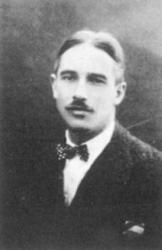
Anthony R. Barringer
 Canada
- Early Life and Education
- Career in Geophysics
- Development of INPUT System
- Founding Barringer Research Ltd.
- Later Developments and Legacy
Early Life and Education
Anthony R. "Tony" Barringer, a Canadian-born geophysicist, was born on October 20, 1925. Before pursuing higher education, Barringer served in the British Army during World War II. In 1948, he enrolled at the University of London, where he earned a Bachelor of Science degree in economic geology from Imperial College of Science and Technology in 1951. He was awarded a Doctorate degree from the same university in 1954.
Career in Geophysics
Barringer left the United Kingdom to join Selco Exploration in Toronto, Canada, as a research geologist. He eventually rose to the position of Chief Geophysicist for the company. During this tenure, he invented the airborne INPUT system and the portable ground electromagnetic system equipment.
Development of INPUT System
The INPUT technology uses a transmitter suspended vertically about 400 feet below the aircraft. It sends electromagnetic impulses in half-sine waves at a rate of one per millisecond. Analysis of the waveforms against a laboratory catalog of waveforms enables researchers to gain an improved understanding of the minerals contained in the rock formations, without the need for physical extraction. The Society of Exploration Geophysicists hailed INPUT as "a major technical achievement that has aided in the discovery of a substantial number of base-metal deposits in many parts of the world."
Founding Barringer Research Ltd.
In 1961, Barringer founded Barringer Research Ltd., a private company where he served as president and majority shareholder. He continued to develop systems similar to INPUT and licensed them to exploration companies. Major oil and mining companies relied on his remote sensing technologies, which contributed to the discovery of over 25 economic ore bodies. Barringer Research went public in 1967. In 1977, Barringer relocated the company's headquarters to Denver, Colorado, along with his own residence. He later became a naturalized U.S. citizen.
Later Developments and Legacy
Barringer's contributions to the mining industry extended to the development of laser-induced fluorescence (LIF) analyzers, widely used in the oil and gas industries. His Correlation Spectrometer (COSPEC) measures atmospheric dispersion of various gases, while his Gaspec infrared sensor for atmospheric gases was used by NASA to measure the global distribution of carbon dioxide. Barringer also designed several particle analyzers, including Cortan, Surtrace, Lasertrace, and Airtrace. He authored over 80 scientific papers and was awarded more than 70 patents in Canada, the United States, and other countries. Barringer officially retired in 1989. He passed away on August 15, 2009, at the age of 85, in Golden, Colorado.