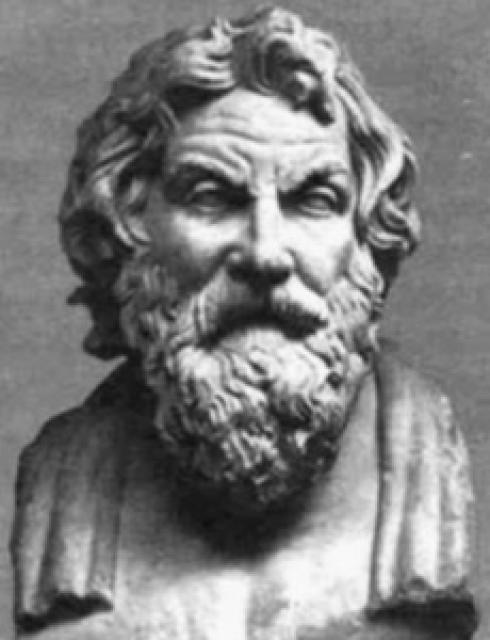
Antisthenes
 Greece
- Antisthenes: The Cynic Philosopher
- Founding the Cynics
- Challenging Social Norms
- Literary and Rhetorical Legacy
- Later Recognition
- Key Teachings
Antisthenes: The Cynic Philosopher
Early Life and InfluencesAntisthenes, born in Athens around 445 BCE, was the son of an Athenian citizen and a slave. He initially studied under Gorgias, a renowned rhetorician. However, his most significant influence came from Socrates, the renowned philosopher.
Founding the Cynics
Antisthenes became the founder of the Cynic school of philosophy, which emphasized virtue as the sole good. He believed that all other material possessions and desires were worthless in comparison. He also criticized Plato's theory of Forms, arguing that virtue could not be abstract but must be manifested in concrete actions.
Challenging Social Norms
Antisthenes was known for his radical ideas that challenged societal norms. He advocated for the equality of all people, regardless of their social status. He also criticized the pursuit of wealth and status, advocating instead for a life of poverty and simplicity.
Literary and Rhetorical Legacy
Antisthenes was a prolific writer, with over 60 works attributed to him. His writings encompassed a wide range of topics, including ethics, politics, and rhetoric. His style was characterized by its simplicity and disregard for conventional forms.
Later Recognition
Despite being largely overlooked by his contemporaries, Antisthenes' ideas gained wider recognition in later centuries. His influence can be seen in the writings of stoic philosophers such as Epictetus and Marcus Aurelius.
Key Teachings
Virtue is the only true good.All material possessions and desires are worthless in comparison.
All people are equal.
A life of poverty and simplicity is the best path to virtue.
Preserved Works
Only fragments of Antisthenes' works have survived, including two declamations, "Ajax" and "Odysseus." These works provide insights into his rhetorical skills and philosophical perspectives.