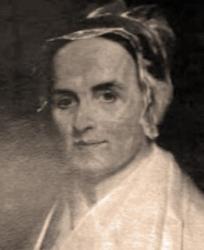
Antoine Barnave
 France
- Early Life and Education
- Legal and Political Career
- National Assembly and Revolutionary Leadership
- Triumvirate and Influence
- Execution and Legacy
Early Life and Education
Antoine Barnave was born into a privileged family in Grenoble, France, on October 22, 1761. His father held the position of consistorial advocate and enjoyed the privileges of the "nobility of the robe." His mother hailed from the ancient nobility, known as the "nobility of the sword."
Barnave received a well-rounded education at home, and like many European intellectuals of the late 18th century, he studied the works of Enlightenment philosophers such as Rousseau, Voltaire, and Montesquieu. These writings, particularly those of Montesquieu, significantly shaped his political beliefs.
Legal and Political Career
In 1783, Barnave followed in his father's footsteps and became an advocate. At a meeting of the Grenoble Parliament that same year, he delivered a speech entitled "On the Separation of Powers," where he expressed his liberal views. The speech brought him recognition throughout France.
From the late 1780s, Barnave became increasingly involved in politics. In 1788, he actively participated in the confrontation between the Grenoble Parliament and the king, who sought to limit their powers. Together with his father, Barnave attended the meeting of the three estates of Dauphiné at Vizille on July 21, 1788. During this period, he wrote several pamphlets opposing absolute monarchy and defending the rights of the Third Estate and parliaments.
Barnave's reputation as a reformer earned him a seat as a deputy from Grenoble to the Estates-General in 1789.
National Assembly and Revolutionary Leadership
Barnave played a pivotal role in the National Assembly, advocating for constitutional monarchy and representing the Third Estate. He served as a commissioner for negotiations on the merging of the estates and drafted an address to the king requesting joint sessions, which was met with resistance from Louis XVI.
In the wake of the events of July 12-14, 1789, Barnave emerged as a popular leader of the Revolution. He was among the most eloquent orators in the National Assembly, delivering impromptu speeches with passionate conviction.
Triumvirate and Influence
Within the National Assembly, Barnave aligned himself with Adrien Duport and Alexandre Lameth, forming a triumvirate that led the liberal faction. They successfully opposed the monarchists on issues such as the adoption of a single-chamber parliament and the creation of a suspensive veto for the king.
Throughout the remainder of the National Assembly's existence, the triumvirate's influence remained dominant. Barnave's ideas and leadership played a significant role in shaping the course of the early French Revolution.
Execution and Legacy
In 1791, Barnave was arrested and charged with treason for his alleged counter-revolutionary activities. He was sentenced to death and executed by guillotine on November 29, 1793, at the age of 32.
Barnave's political career was marked by his unwavering commitment to constitutional monarchy and the principles of the Enlightenment. His eloquent speeches and active participation in the French Revolution cemented his place as one of the most influential figures of the period.