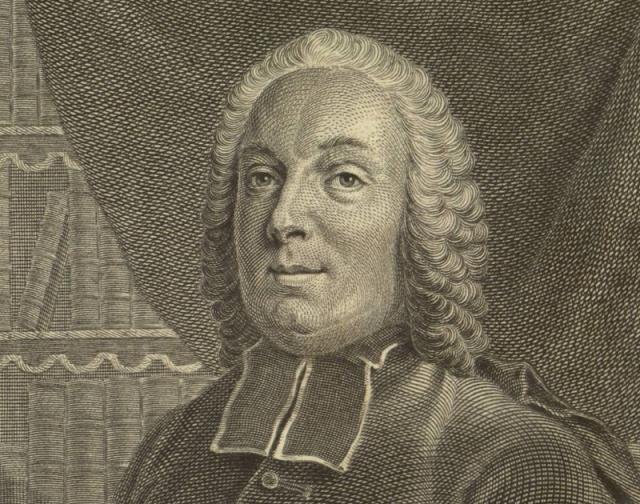
Antoine Franzois Prevost DExiles
 France
Antoine François Prévost Biography
Antoine François Prévost, one of the greatest French writers of the 18th century, is the author of the novel "The Story of the Chevalier des Grieux and Manon Lescaut." Throughout his life, Prévost was torn between two extremes. At times, he desired to dedicate his life to God and higher values, while at others, he impulsively plunged into worldly pursuits. And he always went all the way - almost to the end.
A Life of Contradictions
Prévost became a monk, entered a monastery, and renounced the world. However, shortly before his thirtieth birthday, he climbed over the monastery wall and was no longer a monk. In the secular world, Prévost eagerly made up for lost time. He engaged in free-thinking, which was profitable but dangerous during the 1730s. He courted women, which was not forbidden for a former monk without a parish. Nevertheless, he fell out of favor and was forced to emigrate first to Holland and then to England.
Writing for a Living
In England and Holland, Prévost began writing - for a living. After reading novels by Defoe and Swift, the abbot was inspired to experiment with the new genre of "almost realistic" prose. His novel, "Memoirs of a Man of Quality Who Has Retired from the World," was so successful that booksellers commissioned Prévost to write a sequel. In between the arduous work and gathering strength for the new installment, Prévost suddenly started writing a novella with the unpretentious title "The Story of the Chevalier des Grieux and Manon Lescaut." He intended it to be an insert in the continuation of his novel. He wrote a vast amount of material, but nowadays only "Manon Lescaut" allows us to read his works.
A Provocative Plot
The story of a nobleman who falls in love with a woman of questionable behavior was daring for its time. The fluctuating thoughts and emotions of the protagonist, constantly changing his behavior, were an unfamiliar technique for the period. The debunking of the notion of a "blessed life" in the wild overseas territories, where it turned out that the same emotions and passions reigned as in Europe, struck a blow to the utopian dreams of the era. This little book turned out to be much weightier than its size suggests.