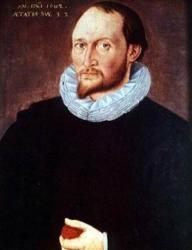
Anton Pannekoek
 Netherlands
- Biography of Anton Pannecoucke
- Contributions to Astronomy
- Recognition and Awards
- Political Activities
- Conflict with Lenin and Later Activities
Biography of Anton Pannecoucke
Anton Pannecoucke was a Dutch astronomer and Marxist theorist. He studied astronomy and mathematics at Leiden University starting in 1891. In 1932, he became a professor at the University of Amsterdam. Pannecoucke laid the groundwork for the study of star distribution in the Milky Way and the determination of the structure of our galaxy. Later, he became interested in the nature and evolution of stars, which led to his recognition as the founder of cosmophysics as a separate discipline in the Netherlands.
Contributions to Astronomy
In 1920, Pannecoucke developed a method for determining the distances to dark nebulae through star counting. From 1921, he focused on studying the brightness of the Milky Way. He was also one of the first to investigate ionization in stellar atmospheres (1922, 1926) and theoretical intensities of spectral lines (1931, 1935). In addition to his theoretical work, he participated in several expeditions to observe solar eclipses and study stellar spectra.
In 1926, he led an expedition to the island of Java to create a map of the constellations in the Southern Hemisphere. He also delved into the history of astronomy, and his book on the subject was published in Dutch and English.
Recognition and Awards
Pannecoucke's contributions to the study of galactic structure, cosmophysics, and the history of astronomy earned him international recognition. He was awarded an honorary degree from Harvard University in 1936 and the Gold Medal of the Royal Astronomical Society in 1951. In honor of his achievements, a crater on the Moon and asteroid 2378 Pannecoucke were named after him. The Astronomical Institute of the University of Amsterdam also bears his name.
Political Activities
In 1901, Anton Pannecoucke joined the Social Democratic Workers' Party of the Netherlands (SDAP). In 1907, he participated in the founding of the left socialist newspaper "Tribune." In 1909, the "Tribunists," including Pannecoucke, were expelled from the SDAP for criticizing the party leadership. Pannecoucke became one of the founders of the Social Democratic Party of the Netherlands (SDP) that same year.
In 1909, Pannecoucke was expelled from the Netherlands and resided in Germany, where he joined the left wing of the Social Democratic Party of Germany (SDP). He quickly became known as a theorist of left-wing social democracy.
In 1918, Pannecoucke participated in the creation of the Communist Party of the Netherlands (CPN). From 1919 to 1920, he was a member of the Amsterdam Bureau of the Comintern. Starting in 1920, he became one of the leaders of the Communist Workers' Party of the Netherlands (KAPN).
Conflict with Lenin and Later Activities
As a "left deviationist," Anton Pannecoucke was strongly criticized by Lenin in his work "Left-Wing Communism: An Infantile Disorder" (1920). Pannecoucke responded to Lenin with a pamphlet titled "World Revolution and Communist Tactics" (1920). In 1921, he was expelled from the CPN for his "left deviation."
In 1922, Pannecoucke was one of the founders and leaders of the Communist Workers' International. In 1927, he was involved in the founding of the International Communist Groups (ICG), but he did not formally join the organization, preferring to focus on theoretical work.
As a recognized Marxist theorist, Pannecoucke was one of the founders of "council communism" (retrocommunism) and a leading figure in the left-radical movement in the Netherlands and Germany during the 1920s and 1930s.
Pannecoucke sharply criticized Lenin and Leninism. He believed that the failure of the Russian Revolution was due to the Bolsheviks replacing the power of the Soviets with the power of the party, which, in his view, led to the Bolsheviks becoming a new ruling class. He articulated his views on Bolshevism in the book "Lenin as a Philosopher" (1938).