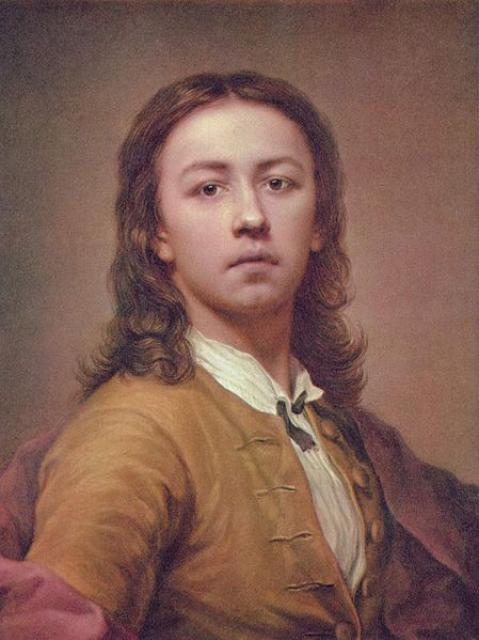
Anton Raphael Mengs
 Italy
ItalyAnton Raphael Mengs: Biography of the Greatest German Neoclassical Painter
Anton Raphael Mengs was the most prominent German painter of the Neoclassical era. Born in 1728 in Aussig, Bohemia, he was the son of Israël Mengs, a court painter in Dresden, Germany. Under the guidance of his father, Mengs embarked on a journey to Rome in 1741, where he diligently studied ancient art and the works of Michelangelo and Raphael.
Early Works and Recognition
After returning to Dresden in 1744, Mengs received the title of court painter from King Augustus III. However, he soon returned to Rome, where he painted several works that garnered widespread acclaim. In 1749, Mengs returned to Dresden and was appointed as the royal painter, receiving a commission to paint an altarpiece for the Catholic court church.
Influence and Travels
Under the pretense of fulfilling this commission, Mengs embarked on his third journey to Rome. In 1761, he was invited to the court of King Charles III of Spain and settled in Madrid. From then on, he divided his time between Madrid and Rome, where he eventually passed away.
Mengs was greatly influenced by Johann Joachim Winckelmann, a prominent art historian, and embraced his aesthetic principles. He focused on the beauty of forms and the adherence to precise composition rules, lighting and shading techniques, and specific painting methods using oil, fresco, watercolor, and pastel. His contributions in this direction earned him significant renown and exerted a strong influence on the development of German painting.
Mengs' Style and Legacy
However, Mengs was criticized for lacking imagination, depth of artistic thought, and emotional warmth in his works. Despite their external merits, his paintings often left viewers indifferent. He attempted to combine the beauty of antiquity with the best features of Raphael, Titian, and Correggio's art, making him an eclectic artist.
Mengs' numerous works can be found in almost every European museum and in the possession of many private collectors, with Madrid being particularly rich in his paintings. In addition to his artistic endeavors, Mengs also expressed his aesthetic views through his writings. He authored several essays and three treatises, which enjoyed respect among art enthusiasts and fellow artists. These writings include "Gedanken über die Schönheit und über Geschmack in Malerei" (Zurich, 1765), "Rifflessioni sopra i tre gran pittori, Raffaello, Tiziano e Corregio," and "Lezioni prattiche di pittura, regole per i maestri affinché insegnano bene la pittura, e per li dischepoli affinché la imparano a dovere" (These three treatises, along with other articles by Mengs, were published in Italian in the collection "G. N. d’Azara, Opere di Ant. Raff. M." in Parma, 1788, and went through two additional editions, as well as translations in German, French, and English).