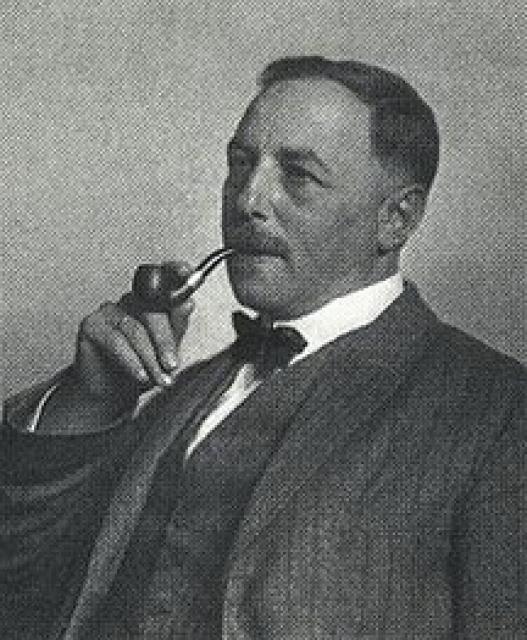
Thomas Theodor Heine
 Sweden
- Thomas Theodor Heine: A Satirical Master
- Artistic Beginnings
- Founder of "Simplicissimus"
- Arrest and Conflict with the Nazis
- Exile and Persecution
- Life in Exile and Artistic Legacy
Thomas Theodor Heine: A Satirical Master
Early Life and EducationThomas Theodor Heine (1867-1948) was born into an affluent Jewish family in Leipzig, Germany. He attended the prestigious St. Thomas School, but his promising academic career was cut short when he was expelled for anonymous caricatures published in a satirical magazine.
Artistic Beginnings
Heine continued his artistic pursuits at the Düsseldorf Academy of Art and later the Munich Academy of Fine Arts. Early on, he focused on landscape painting, but soon embraced graphic arts and caricature. In 1892, he joined the staff of the satirical magazine "Fliegende Blätter."
Founder of "Simplicissimus"
In 1895, Heine co-founded the renowned satirical weekly "Simplicissimus" with publisher Albert Langen. The magazine quickly gained popularity, and Heine's sharp-tongued drawings and caricatures became a staple of its pages. He also created the magazine's iconic emblem, the red bulldog.
Arrest and Conflict with the Nazis
Heine's biting satire often drew controversy. In 1898, he was arrested for insulting the emperor. After the Nazi Party seized power in 1933, Heine, who had long been on their radar due to his political cartoons, was targeted for arrest.
Exile and Persecution
Heine fled Munich to Berlin, where he hid momentarily. He then escaped to Prague on a forged passport and eventually settled in Brno in 1936. After the German occupation of Czechoslovakia in 1938, he moved to Norway.
Life in Exile and Artistic Legacy
Under Nazi occupation in Norway, Heine was forbidden to draw and exhibit his work. He turned to writing, penning the satirical autobiography "Ich warte auf Wunder" ("I Wait for Miracles"), which was published in Swedish in 1944.
Heine fled to Sweden in 1942 and eventually obtained Swedish citizenship. In 1947, a major retrospective of his work was held in Stockholm on his 80th birthday. His art gained renewed appreciation in Germany with the 2000 exhibition at the Lenbachhaus Gallery in Munich.