Antonio Dias
 Portugal
- António Dias: The Pioneer of Portuguese Ethnology and Anthropology
- Educational Background and Teaching Career
- The Influence of Richard Thurnwald and Professor Höffler
- Contributions to Portuguese Ethnography and Anthropology
- Legacy and International Recognition
António Dias: The Pioneer of Portuguese Ethnology and Anthropology
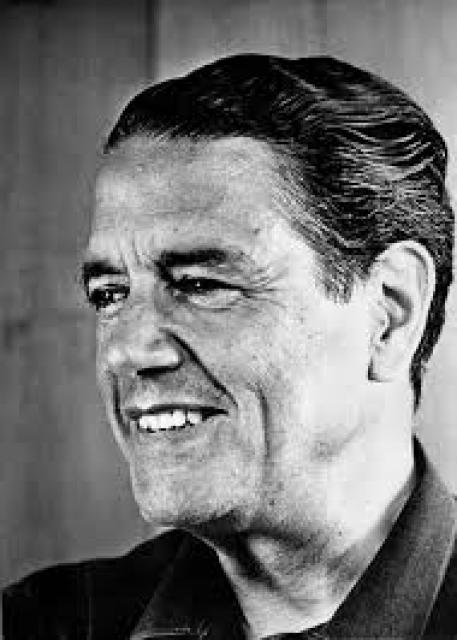
António Dias, born in Porto, is widely recognized as the foremost Portuguese ethnologist and anthropologist. He is renowned for his groundbreaking contributions to the field of Portuguese ethnology, having established the foundation for modern Portuguese ethnography and created a distinguished scientific school of thought.
Educational Background and Teaching Career
Dias completed his studies at the Faculty of Philology at the University of Coimbra in 1938. He received a scholarship to lecture on the Portuguese language and culture at various foreign universities, including those in Germany and Spain. Notably, he became the first Portuguese professor to teach the Portuguese language in Munich, Rostock, Berlin, Santiago de Compostela, and Madrid.
The Influence of Richard Thurnwald and Professor Höffler
During his time in Berlin, Dias directed the Institute of Portugal and Brazil. It was there that he attended lectures by Richard Thurnwald, which sparked his enduring interest in ethnology. Subsequently, under the guidance of Professor Höffler in Munich, Dias defended his doctoral dissertation on rural communities, focusing on the village of Vilarinho da Furna.
Contributions to Portuguese Ethnography and Anthropology
Upon returning to Portugal in 1947, Dias was invited to organize ethnographic research at the Center for Ethnological Studies of the Peninsula (CEEP). From 1948 onwards, he conducted extensive research on ethnology in continental Portugal, initially at the Center for Ethnological Studies of the Peninsula (CEEP) and later at the Center for Cultural and Anthropological Studies (CEAC). Alongside a small group of students and collaborators, including E. V. de Oliveira and B. E. Pereira, Dias amassed, systematized, and published a vast amount of ethnographic material.
Furthermore, Dias played a vital role in the organization uniting ethnologists and folklorists from all European countries, the International Committee for Folklore Studies (CIAP). His efforts helped resolve the dispute between folklorists and ethnologists. Elected Secretary-General of CIAP in 1954, Dias led the headquarters of this international organization in Portugal from 1954 to 1956.
Legacy and International Recognition
Dias's work garnered international acclaim. His research on the classification and study of the origins of agricultural tools received enthusiastic praise from renowned scholars such as S. Erikson, P. Rivière, and A. van Gennep. Moreover, Dias advocated for the unity of ethnological studies, actively opposing the division of subjects based on the study of one's own people versus others, particularly non-European peoples. He played a critical role in renaming the 1955 congress from "Congress on Folklore" to "Congress on Regional Ethnology" based on his proposal.
Additionally, Dias was instrumental in establishing two ethnographic museums and ethnology departments at three universities in Portugal. In 1964, he attended the International Congress of Anthropology and Ethnology in Moscow. His broad range of scholarly interests encompassed theoretical ethnology, traditional tools, rural communities, exotic populations in Mozambique, the formation of nations, and regional ethnography. Dias contributed extensively to academic literature, publishing his works in Portuguese, English, French, German, and other languages.