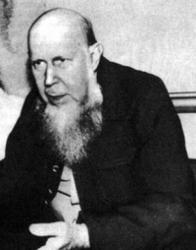
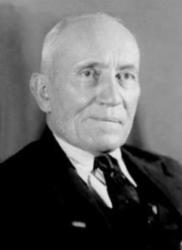
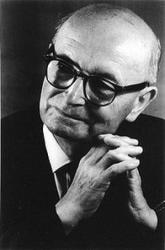
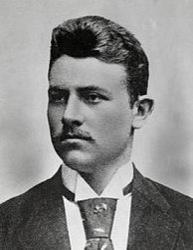
Dmitriy Olderogge
 Lithuania
- Dmitriy Alexeyevich Olderogge: A Pioneer of African Studies in Russia
- Career in Academia and Museum Administration
- Academic Research and Contributions
- Kinship Systems
- Hamito-Semitic Theory
- Linguistic Studies
- Expeditions and Administrative Roles
- Editorial Contributions and Legacy
Dmitriy Alexeyevich Olderogge: A Pioneer of African Studies in Russia
Early Life and Military ServiceDmitriy Alexeyevich Olderogge was born into a military family in Russia. He attended the Cadet Corps in Saint Petersburg before being mobilized into the Red Army. After his military service, Olderogge pursued his education at the University of Leningrad, where he specialized in Egyptology.
Career in Academia and Museum Administration
In 1925, Olderogge joined the African Department of the Academic Museum of Anthropology and Ethnography (today known as the Kunstkamera). In the late 1920s, he traveled to Germany, the Netherlands, and Belgium to study under renowned Africanist Diedrich Westermann.
Upon his return, Olderogge began teaching ethnography and African languages (e.g., Swahili, Zulu, and Hausa) at various universities in Leningrad. In 1932, he was appointed Director of the Museum of Anthropology and Ethnography, a position he held until 1940.
Academic Research and Contributions
Olderogge became one of the most prominent Africanists in the Soviet Union. His research spanned various disciplines, including Egyptology, history, ethnography, culture, art, and linguistics.
Kinship Systems
Olderogge made significant contributions to the study of kinship systems in Tropical Africa. His theories on "ring relationship" and "three-clan union" were influential in the field.
Hamito-Semitic Theory
Olderogge challenged the Hamito-Semitic theory, which proposed a linguistic relationship between Afro-Asiatic and Niger-Congo languages. He argued that the "Hamitic" language group was heterogeneous and lacked a common linguistic ancestor.
Linguistic Studies
Olderogge published extensively on African linguistics, including textbooks, dictionaries, and articles on Bantu languages, counting systems, and spatial-temporal expressions.
Expeditions and Administrative Roles
Despite the Cold War, Olderogge was one of the few Soviet Africanists to conduct fieldwork in Africa. He participated in expeditions to Egypt, Senegal, Mali, and other countries between 1950 and 1960.
Olderogge also played a leading role in the establishment of the African Studies Department at the University of Leningrad and served as its chair from 1946 until his death.
Editorial Contributions and Legacy
Olderogge initiated and edited several important publications, including the "Encyclopedia of Africa" and the "Africana: African Ethnographic Collection." His work has had a lasting impact on African studies in Russia and beyond.