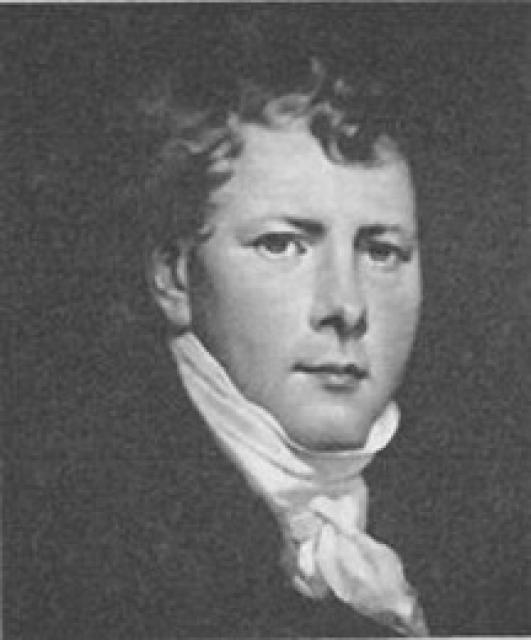
Antoniy Brodovskiy
 Poland
- Antoni Brodowski: Pioneer of Polish Classicism
- Return to Warsaw and Academic Success
- Influence and Disciples
- Artistic Legacy
- Theoretical Contribution
- Legacy
Antoni Brodowski: Pioneer of Polish Classicism
Early Life and EducationAntoni Brodowski, a Polish painter and educator, emerged as a leading figure in the annals of Polish classicism. Born in 1784, he received his early training from renowned artists such as Felix Ivo Leicher and Johann Friedrich Cappler. In pursuit of further artistic knowledge, he journeyed to Paris, studying under the esteemed painters Jacques-Louis David and François Gérard.
Return to Warsaw and Academic Success
In 1814, Brodowski returned to Warsaw. His artistic prowess was recognized when his painting "The Wrath of Saul on David" earned him a prestigious gold medal. This triumph led to his appointment as professor of drawing and painting at the Faculty of Fine Arts at the University of Warsaw.
Influence and Disciples
Brodowski became a member of the Warsaw Scientific Society in 1822. His influence as an educator extended to notable artists, including Rafał Hadziewicz, Jan Nepomucen Głowacki, and Jakub Tatarkevich.
Artistic Legacy
Throughout his career, Brodowski produced masterpieces inspired by mythological, biblical, and historical themes. He was also renowned for his skillful portraits. His sons, Józef and Tadeusz, inherited his artistic talents and became accomplished painters in their own right.
Theoretical Contribution
In addition to his artistic endeavors, Brodowski penned the theoretical treatise "On the Situation of the Artistic School" (1824). This work articulated his insights on art education and the importance of fostering artistic excellence.
Legacy
Antoni Brodowski's contributions to Polish art left an enduring mark. He is remembered as a pioneer of the classical style in Poland, introducing new artistic techniques and inspiring generations of artists. His paintings continue to adorn museums and private collections, showcasing his brilliance and the profound impact he had on Polish art history.


