Antun Vrancic
 Hungary
- Antun Vrančić: Hungarian Bishop, Historian, and Diplomat
- Diplomatic Missions and Religious Career
- Cardinal and Scholar
- Literary Legacy
Antun Vrančić: Hungarian Bishop, Historian, and Diplomat
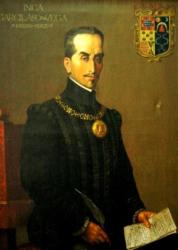
Early Life and EducationAntun Vrančić was born in Šibenik, Dalmatia, in 1504. He came from a noble Croatian family that fled Bosnia and Herzegovina to escape Turkish invasion. Vrančić's influential relatives included Petar Berislavić, a former ban of Croatia.
After receiving his education in Padua, Venice, and Kraków, Vrančić embarked on a diplomatic career at the age of 26. He served King János Szapolyai of Hungary and later Queen Isabella Jagiełło.
Diplomatic Missions and Religious Career
Vrančić undertook diplomatic missions to Poland, Italy, France, and England. He also visited Istanbul twice to negotiate a peace treaty between the Habsburgs and the Ottoman Empire.
In parallel, Vrančić pursued an ecclesiastical career. He was consecrated as Bishop of Pécs in 1554, then Bishop of Eger in 1560. In 1569, he became Archbishop of Esztergom and Primate of Hungary.
Cardinal and Scholar
In 1573, Pope Gregory XIII appointed Vrančić a cardinal, but he died just days later. His remains were interred in the Church of St. Nicholas in Trnava.
Vrančić was a renowned intellectual. He was fluent in multiple languages, including Turkish, and corresponded with Erasmus of Rotterdam and Philip Melanchthon. He translated a Turkish chronicle into Latin and wrote extensive historical works on Hungarian-Turkish relations and the struggle between János Szapolyai and Ferdinand Habsburg.
Literary Legacy
Vrančić was also a skilled writer, authoring lyrical poems and philosophical treatises in Latin. His complete works were published in a 12-volume edition by the Hungarian Academy. Vrančić's letters, numbering over 4,000, provide valuable insights into the history of the 16th century.