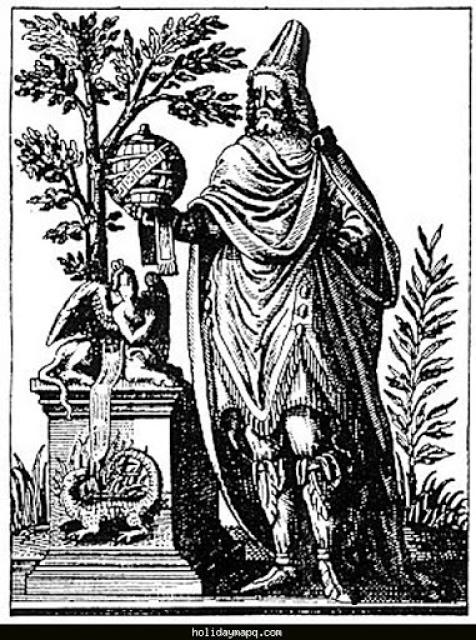
Apollonius Ephesus
Apollonius of Ephesus is remembered as an early Christian writer whose account of Montanism became an important source for later church history. His own life is largely unknown: he wrote around the turn of the third century, but his birthplace, dates and church office cannot be established with confidence. The name by which he is known reflects his close engagement with the Christian communities of Ephesus and nearby Phrygia.
A writer in a time of controversy
In the late second century, the movement later called Montanism spread from Phrygia in Asia Minor. Its followers emphasized prophetic utterance and the expectation of a new age, and its opponents disputed both its claims to prophecy and the authority of its leaders. Apollonius entered this debate with a substantial work against the movement, composed, he said, about forty years after Montanus began to prophesy. Depending on how that chronology is interpreted, the treatise is generally placed around the beginning of the third century.
The surviving record identifies Apollonius only as an “ecclesiastical writer.” A much later source calls him bishop of Ephesus, but earlier writers do not confirm that title, so historians treat it cautiously. Nor do we know much about his personal circumstances. His knowledge of Ephesian Christian history suggests that he was familiar with the region, but it does not establish where he was born or served.
His work against Montanism
Apollonius’s original treatise has not survived. Its remains come chiefly through the fourth-century historian Eusebius of Caesarea, who quoted and summarized it in his *Ecclesiastical History*. Apollonius challenged the Montanist leaders’ prophetic claims, criticized their conduct and described disputes within the movement. He also referred to figures such as Themison, Maximilla and Zoticus, preserving names and episodes that would otherwise be obscure.
Because Apollonius wrote as an opponent, his accusations need to be read as polemic rather than neutral reporting. Even so, the fragments offer valuable evidence for how Christians argued about prophecy, authority and religious practice in the period. They also reveal how local conflicts in Asia Minor entered a broader debate over what counted as legitimate teaching and spiritual leadership.
Some later accounts say that the North African theologian Tertullian answered Apollonius in a section of his now-lost work *On Ecstasy*. Tertullian had become a defender of Montanist prophecy, making this reported response an example of how the controversy crossed regional and literary boundaries. The details cannot be reconstructed fully because neither writer’s complete work survives.
Legacy
Apollonius left no known biography, and even the title “of Ephesus” rests on an uncertain tradition. His significance instead lies in the portion of his argument preserved by Eusebius. Through those excerpts, a lost polemical work became part of the historical record and helps scholars trace the early church’s disputes over prophetic movements. His account remains useful precisely when read with care: it documents both the events and the arguments of one side in a contested religious landscape.


