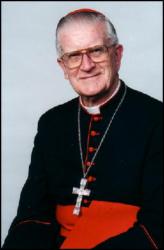
Archimandrit Ioil
 Belarus
- Early Life and Education
- Monastic Life and Teaching Career
- Archimandrite and Monastic Leadership
- Stewardship and Book Collection
- Retirement and Legacy
- Connection to "The Tale of Igor's Campaign"
- Authorship Hypothesis
- Later Research
Early Life and Education
Archimandrite Ioil Bykovsky(1720-1798) was a prominent figure in the Russian Orthodox Church known for his academic pursuits and spiritual writings. From 1741 to 1753, he studied at the Kyiv-Mohyla Academy, a renowned center for theological and humanistic education in Eastern Europe.
Monastic Life and Teaching Career
In 1757, Bykovsky took monastic vows and was ordained as an hierodeacon, earning the monastic name Ioil. He subsequently began teaching at the Kyiv-Mohyla Academy. In 1758, the Kyiv Spiritual Consistory sent him to Saint Petersburg to teach at the Land Forces Noble Corps. Concurrently, he served as a chaplain at the Imperial Academy of Arts.
Archimandrite and Monastic Leadership
In the early 1760s, Bykovsky was transferred to Chernihiv as archimandrite of the Trinity-Ilyinsky Monastery. In 1776, he became archimandrite of the Savior-Transfiguration Monastery in Yaroslavl. He also assumed the role of rector of the seminary associated with the monastery and became a censor of religious literature.
Stewardship and Book Collection
During his decade of service in Yaroslavl, Archimandrite Ioil significantly expanded the monastery's book collection. Monastic records indicate that not a single book was lost or withdrawn during his tenure. However, after the monastery was abolished and converted into an archbishop's house under the authority of Arseniy (Vereshchagin), books began to disappear. According to Arseniy's diary, 1,549 books had vanished by January 1, 1791.
Retirement and Legacy
In 1787, the Savior-Yaroslavl Monastery was abolished by imperial decree, and Archimandrite Ioil was dismissed from his duties and placed on pension. However, he continued to live in the monastery. Even in his retirement, he maintained a keen interest in literature and purchased books from Moscow and Saint Petersburg. His collection covered a wide range of topics, including travelogues and religious treatises. Ioil passed away in 1798 and was buried in the Yaroslavl Tolgsky Monastery.
Connection to "The Tale of Igor's Campaign"
The discovery of the medieval epic poem "The Tale of Igor's Campaign" is associated with Archimandrite Ioil. Count Alexei Musin-Pushkin claimed that Ioil, a "man of education and fondness for literature," had possessed a book called "Chronograph" that contained the poem.
Authorship Hypothesis
In the 20th century, some scholars, including Andre Mazon and Alexander Zimin, proposed that Ioil Bykovsky might have been the author of "The Tale of Igor's Campaign." This hypothesis, however, has been discredited by modern Slavic studies. Ioil Bykovsky is now considered a possible owner of the Musin-Pushkin manuscript that contained the poem.
Later Research
Recent research suggests that Musin-Pushkin, who served as the chief prosecutor of the Holy Synod, obtained the manuscript from the Kirillo-Belozersky Monastery in 1791/92 and claimed it as his own.