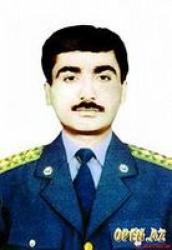
Arkadiy Koshko
 France
- Early Life and Career
- Ascent in the Police Force
- Revolutionary Achievements
- Exile and Downfall
- Emigration to France
- Legacy and Memoirs
Early Life and Career
Born in 1867 into an affluent and noble family, Arkady Franzevich Koshko embarked on a military career, graduating from the Kazan Infantry Cadet School and receiving an appointment to a regiment stationed in Simbirsk. Despite initially enjoying his time in the army, Koshko yearned for a profession that better suited his disposition and would provide more tangible benefits to society. Inspired by his passion for detective novels, he resolved to pursue a path in criminology.
Ascent in the Police Force
In 1894, Koshko resigned from the military and joined the Riga Police as an inspector. He quickly distinguished himself as a talented investigator, demonstrating high crime clearance rates, personal bravery, and an adept application of advanced European criminology practices. His efforts earned him both recognition and rapid promotions within the force.
Revolutionary Achievements
Koshko's innovative identification system, which combined anthropometric and dactyloscopic data, revolutionized criminal identification. He established extensive photographic, anthropometric, and dactyloscopic databases within the Moscow Police, creating an unparalleled repository of criminal information. This system became influential, eventually being adopted by Scotland Yard. Internationally, Russian detective work was lauded as the world's best in terms of crime detection at the 1913 International Congress of Criminologists in Switzerland.
Exile and Downfall
The Bolshevik Revolution in 1917 abruptly ended Koshko's illustrious career as he refused to support the new regime. Forced to flee, he briefly resided in Kiev and Odessa before making his way to Turkey. However, his financial resources were depleted, compelling him to establish a private detective agency in Constantinople, catering to a clientele of wealthy expats and offering advice and investigations.
Emigration to France
News of looming arrests by the Turkish government prompted Koshko to seek refuge in France, where he received political asylum in 1923. Despite his reputation, finding employment proved challenging. Eventually, he obtained a position as a manager in a fur shop while maintaining the hope of returning to Russia. He declined offers from Scotland Yard for senior positions due to his reluctance to become a British citizen.
Legacy and Memoirs
General Koshko passed away in Paris on December 24, 1928, and was laid to rest there. In his later years, he authored three volumes of memoirs, encapsulating his most notable investigations in vivid and engaging accounts. Published under the collective title "Essays on the Criminal World of Tsarist Russia," his memoirs garnered acclaim within the Russian émigré community and remain a valuable historical record.