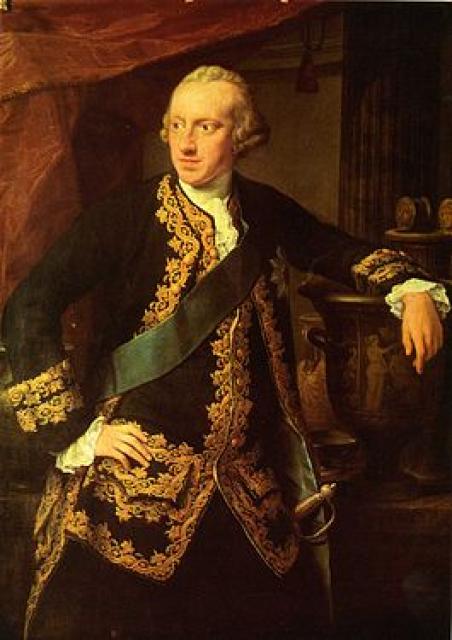
arl Wilhelm Ferdinand
 Germany
- Early Life and Education
- Military Career
- Marriage and Travels
- Reign as Duke of Brunswick
- French Revolution and Wars
- Later Years and Death
- Legacy and Children
Early Life and Education
Born in Wolfenbüttel in 1735, Karl Wilhelm Ferdinand was the son of Karl I, Duke of Brunswick-Wolfenbüttel, and Princess Philippine Charlotte of Prussia. He received an exceptional education, traveling extensively throughout Europe, including the Netherlands, France, and various German principalities.
Military Career
Ferdinand played a prominent role in the Seven Years' War, fighting under Prince William, Duke of Cumberland, at the Battles of Hastenbeck and Krefeld. During the war, he rose to the rank of general and became renowned as a master of "small warfare." He distinguished himself in the battles of Minden and Warburg.
Marriage and Travels
After the war, Ferdinand married Augusta, Princess of Wales, in 1764. He later visited France, meeting the famous writer Marmontel, and Switzerland, where he befriended Voltaire. Ferdinand spent a period in Rome studying ancient ruins, then returned to Paris and eventually settled in Brunswick, where he devoted himself to improving the war-ravaged duchy.
Reign as Duke of Brunswick
In 1780, Ferdinand ascended to the Duchy of Brunswick. As a ruler, he pursued a policy of enlightened absolutism, prioritizing financial stability and caution, which sometimes led him to abandon planned reforms. He implemented Prussian military and civil administration practices and forged a close alliance with Prussia, becoming a Prussian field marshal in 1787.
French Revolution and Wars
In 1792, Ferdinand was appointed commander of the Austro-Prussian army during the French Revolution. However, his notorious "Brunswick Manifesto," threatening severe reprisals against revolutionaries, sparked widespread outrage in France and hastened the overthrow of the monarchy. The Austro-Prussian army under Ferdinand's leadership fought an inconclusive battle at Valmy and was forced to withdraw from France shortly after.
Later Years and Death
Despite disagreements with King Frederick William II, Ferdinand resumed command of the Prussian army during the War of the Fourth Coalition. However, he was defeated by Marshal Davout at the Battle of Auerstädt in 1806 and died from his wounds shortly after.
Legacy and Children
Ferdinand's military career was marked by notable successes and setbacks. His Brunswick Manifesto remains a controversial document in French history. He was married to Augusta, Princess of Wales, and had eight children, including Queen Caroline of Great Britain and King Frederick William of Württemberg.


