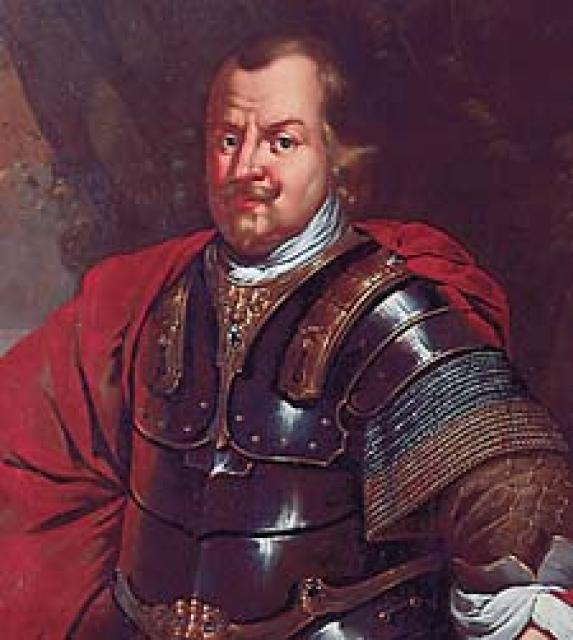
Ioann Baner
 Sweden
- Johan Banér: A Swedish Military Leader
- Early Career
- Thirty Years' War
- Rise to Command
- Later Campaigns
- Victories and Setbacks
- Final Campaign and Legacy
Johan Banér: A Swedish Military Leader
Johan Banér was a prominent military commander during the Thirty Years' War who fought for Sweden. Born in Djursholm, his father and uncle were executed for supporting King Sigismund III of Poland. However, despite this, Banér and King Gustav Adolf developed a close friendship.
Early Career
Joining the Swedish army in 1615, Banér distinguished himself in the siege of Pskov, rising to the rank of colonel by the age of 25. He fought in wars against Russia and Poland, demonstrating exceptional bravery and leadership.
Thirty Years' War
In 1630, under King Gustav Adolf, Banér participated in the Swedish campaign in northern Germany, leading the right flank of the cavalry at the Battle of Breitenfeld. He played a key role in capturing Augsburg and Munich, and also fought at Donauwörth and the Battle of Lech.
Rise to Command
After an unsuccessful attack on Wallenstein's camp in which Banér was wounded, he took command of all the Swedish forces in four regions as the king retreated to Lützen. With the help of Gustav Horn, Banér forced General Aldringer to withdraw from Bavaria.
Later Campaigns
As a Swedish field marshal, Banér led an army into Bohemia in 1633, advancing towards Prague. However, the defeat of Bernard of Saxe-Weimar at the Battle of Nördlingen halted his progress. The subsequent Peace of Prague placed the Swedish army in a precarious position.
Victories and Setbacks
In 1636, Banér, Karl Gustav Wrangel, and Lennart Torstensson combined forces and defeated the Imperial army at the Battle of Wittstock, restoring Swedish influence in central Germany. Despite their combined strength, Banér faced setbacks and retreated to Pomerania after escaping from an осаждённый garrison in Torgau.
Final Campaign and Legacy
In 1639, Banér re-entered northern Germany, defeating the Saxons at Chemnitz and establishing himself in Bohemia. In the winter of 1640-1641, he led a daring raid to join the French under Gebrian and reach Regensburg, where the Reichstag was meeting. However, the freezing of the Danube prevented Banér from capturing the city, and he retreated to Halberstadt. He died there on May 10, 1641, appointing Torstensson as his successor.
A renowned commander, Banér earned the respect of his troops and the admiration of Emperor Ferdinand II, who offered him a position in his army, which he declined. His son was later granted the title of count.


