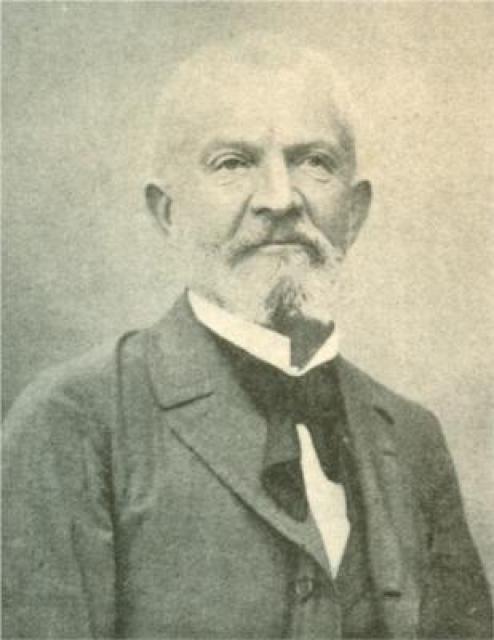
Armand Guillaumin
 France
- Armand Guillaumin: The Last Impressionist
- Transition to Impressionism
- Leaving His Railway Job and Struggles
- Impressionist Exhibitions and Recognition
- Suburban and Industrial Landscapes
- Influence of Pointillism and Travel
- Legacy: The Last Impressionist
Armand Guillaumin: The Last Impressionist
Early Life and Artistic BeginningsArmand Guillaumin was born in Paris on February 16, 1841. His family moved to Moulins later that year, and he returned to Paris in 1856 at the age of 16. Guillaumin began attending art classes at the municipal school under sculptor Cailouet.
Transition to Impressionism
In 1860, Guillaumin began working for the Paris-Orléans railway company. However, he continued to pursue his artistic interests and enrolled at the Swiss Academy in Paris, where he met Francisco Oller, Camille Pissarro, and Paul Cézanne. In 1863, Guillaumin exhibited work alongside Édouard Manet, Pissarro, and Cézanne at the renowned Salon des Refusés, although his works were not listed under his name.
Leaving His Railway Job and Struggles
In 1868, Guillaumin resigned from the railway company to devote himself entirely to painting. However, he faced financial difficulties and earned a living painting curtains. In 1872, he was forced to return to the railway service, but continued to pursue painting.
Impressionist Exhibitions and Recognition
Guillaumin participated in almost all the Impressionist exhibitions (except the second in 1876). At the first Impressionist exhibition in 1874, he exhibited three landscape paintings. This exhibition likely marked the moment when Guillaumin's talent was fully appreciated within the Impressionist movement. His "Sunset in Ivry" showcased a brightly-lit landscape, similar to Monet's "Impression, Sunrise."
Suburban and Industrial Landscapes
As he worked in Paris, Guillaumin primarily painted the surrounding areas, including the suburbs and scenes along the Seine, Oise, and Essone rivers. Notable works from this period include "Parc d'Issy-les-Moulineaux" (1877), "Pont de Charenton" (1878), and "View of the Île Saint-Louis" (c. 1881).
Influence of Pointillism and Travel
After meeting Paul Signac in 1883, Guillaumin began to experiment with the pointillist technique. In 1891, he won 100,000 francs in a lottery, enabling him to leave his administrative job and travel to seek new subjects. He visited Saint-Palais, Crozon, Auvergne, and other regions, painting landscapes and capturing vivid colors.
Legacy: The Last Impressionist
In his later years, Guillaumin focused solely on painting. His material independence allowed him to experiment freely, but his compositions lacked the breadth and poetic subtleties of his Impressionist contemporaries like Monet and Pissarro. Guillaumin died in June 1927, the last of the major Impressionists. His work had a significant influence on the development of Fauvism through artists like Othon Friesz.



