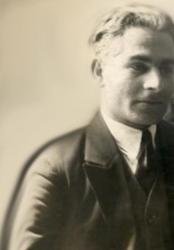
Man Ray
 France
- Early Life and Education
- Photography and Dadaism
- Surrealism and Paris
- Avant-Garde Films
- Collaboration with Méret Oppenheim and Berenice Abbott
- Later Life and Legacy
Early Life and Education
Emmanuel Radnitzky, later known as Man Ray, was born in Philadelphia, Pennsylvania, in 1890. His family was of Jewish descent, having emigrated from Russia. In 1897, the family relocated to New York City, where Man Ray spent his formative years. In 1912, the family changed their surname to Ray to escape anti-Semitic harassment.
Man Ray initially pursued art education in New York City, studying at the Ferrer Center and the Art Students League. He was particularly drawn to the photography of Alfred Stieglitz, which introduced him to European avant-garde movements.
Photography and Dadaism
In 1918, Man Ray embarked on a serious exploration of photography and filmmaking. He experimented with various techniques, including photograms (rayographs), solarization, and montage. Along with Marcel Duchamp and Francis Picabia, he founded the New York branch of Dadaism and published the only issue of the journal "Dada in New York" in 1920.
Surrealism and Paris
In 1921, Man Ray moved to Paris, which became his home for most of his life. He aligned himself with the Surrealist movement and made significant contributions to its aesthetics. He participated in the collective exhibition of Surrealists at the Galerie Pierre in 1925 and created a number of iconic photoportraits of notable figures, including Jean Cocteau, Erik Satie, and James Joyce.
Avant-Garde Films
In addition to photography, Man Ray also produced several avant-garde films, including "Emak Bakia" and "L'Étoile de mer." He also starred in René Clair's "Entr'acte."
Collaboration with Méret Oppenheim and Berenice Abbott
Man Ray collaborated with Surrealist artist Méret Oppenheim on a series of nude photographs in 1934. He also played a pivotal role in bringing the work of photographer Eugène Atget to the attention of Surrealists and the public, thanks to his collaboration with Berenice Abbott.
Later Life and Legacy
In 1940, Man Ray returned to the United States, where he taught painting and photography. He returned to Paris in 1951 and remained there until his death in 1976. His work continues to be celebrated today, and his daughter, Anna Ray, has written several books about his life and renowned friendships.