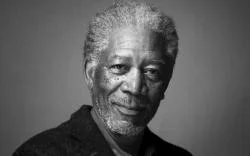
Armas Jokio
Armas Jokio (1918–1998) was a Finnish actor and bass singer whose comic screen roles made him a familiar face in postwar popular cinema. He appeared in nearly sixty films, most memorably as caretaker Pikkarainen in the Pekka ja Pätkä comedy series. On screen, his humor often came through in his expressions and physical presence as much as in dialogue; away from film, he worked in opera, operetta, revue, and television.
Music and early performance
Jokio was born in Helsinki on 21 February 1918. After primary school, he attended a cantor-organist school and continued his music studies at the Sibelius Academy. During the Second World War, he performed on entertainment tours for Finnish troops. After the war he sang bass at the Finnish National Opera, where the performance archive records roles in productions including The Two Queens, Prince Igor, and Rigoletto.
He also moved into lighter theatrical forms. From 1947 to 1959 he was a performer at the Red Mill revue theatre, and he later appeared in productions at Hilkka Kinnunen’s Operetta Theatre. His work as a singer and comic performer made him a versatile presence across Helsinki’s entertainment scene.
A familiar face in Finnish cinema
Jokio’s film work ran from the 1940s through 1981 and encompassed almost sixty supporting roles. One early notable part was the sailor Pohjola in Kalle Aaltosen morsian (1948). He later appeared in a wide range of popular comedies and adventure films, including Lentävä kalakukko (1953) and Majuri maantieltä (1954).
His best-known recurring character was the caretaker Pikkarainen in the Pekka ja Pätkä films, a popular comedy series of the 1950s. He played the role in many entries, including Pekka ja Pätkä puistotäteinä (1955), Pekka ja Pätkä Suezilla (1958), and Pekka ja Pätkä mestarimaalareina (1959). Another recognizable part was the childlike Pikku-Aleksi in Muhoksen Mimmi (1952), Lentävä kalakukko, and Majuri maantieltä. He also took a larger role as Jaakko Naskali in Kaksi vanhaa tukkijätkää (1954).
Jokio’s screen persona favored comic character parts, and his expressive face helped make even brief appearances memorable. He continued appearing on stage and in television productions into the 1970s. After an actors’ strike interrupted his income in the mid-1960s, he took a job as a doorman for a cooperative organization while continuing to perform.
Later years and legacy
Jokio’s final film role was a guard in Kiljusen herrasväki (1981). He spent his retirement in Koivukylä, Vantaa, and died there on 12 October 1998, aged 80. He was buried at Malmi Cemetery in Helsinki.
His career linked Finnish opera and revue with the country’s postwar film boom. Although he was rarely the leading star, his work across film, theatre, and song made him a distinctive and enduring supporting performer in Finnish entertainment.