Arnold Gehlen
 Germany
Biography of Arnold Gehlen
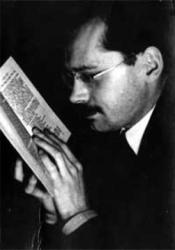
Arnold Gehlen was a German philosopher and sociologist, known as one of the founders of philosophical anthropology and a representative of technocratic conservatism. He was heavily influenced by Hans Driesch, Nikolai Hartmann, and especially Max Scheler. He belonged to the Leipzig School of Sociology.
In 1933, Gehlen joined the Nazi Party (NSDAP). In 1943, he was drafted into the Wehrmacht. After denazification, he taught at a college in Speyer. In the late 1960s, he became a fierce critic of protest movements.
Contributions to Philosophical Anthropology
Gehlen's main work, "Man, His Nature and Place in the World" (1940), focused on questions of philosophical anthropology. Continuing the traditions of Scheler and Plessner, Gehlen was even more radical. He aimed to completely break away from the metaphysical tradition, influenced by American pragmatism.
Gehlen's approach is largely biological. Describing humans as "impaired beings" using Herder's metaphor, he asked how such creatures as humans are capable of survival. According to Gehlen, unlike animals, humans cannot survive in their natural environment as their instincts are reduced. They are overloaded with an excess of information ("excessive burden").
From this insufficiency, Gehlen sought to derive all phenomena of human existence. The "excessive burden" necessitates "psychological relief," which is provided by social institutions that ensure human survival. Institutions serve as substitutes for reduced instincts.
Humans are active beings who actively shape their environment. In this activity, humans create culture as a means of their own survival.
Gehlen held conservative views. His sociological project was based on his understanding of humans as impaired yet active beings. Since humans have reduced instincts, their activities are not determined by instincts but by society. All human inclinations are socially formed through the process of upbringing, rather than being purely natural.
In addition to remnants of instincts, humans have various motivations and needs. Humans are capable of creating their own world. This ability is the flip side of their insufficiency. Human experience is ordered through language and social institutions.
Social institutions give human psyche stability. They are necessary for providing humans with a specific identity and serve the function of "psychological relief." Humans cannot realize themselves directly and must always mediate their activities through institutions. Therefore, it is impossible to speak of a "natural" human separate from culture.
According to Gehlen, social institutions were most effective in archaic societies. They fulfilled all their compensatory functions for the human nature's insufficiency. However, in modern times, human subjectivity comes to the forefront. Humans live in a state of chronic reflection and are constantly trying to form their own identity, whereas previously, this identity was predetermined.
Views on Modern Art and Ethics
One of Gehlen's later works, "Pictures of Time," focused on contemporary art. For Gehlen, contemporary art is an example of human subjectivization. Artists create a language that is not understood by the uninitiated viewer. Art becomes highly rational and reflexive. It is fundamentally fragmented, in the process of becoming, and not rooted in tradition.
His work "Morality and Hypermorality" is dedicated to ethics. In it, Gehlen criticizes the ethics of "humanitarianism" and the acceptance of other cultures (multiculturalism). According to Gehlen, such ethics imply the loss of Europeans' own identity. Intellectuals advocating for this type of ethics "demand unlimited freedom for themselves and equality for everyone else."