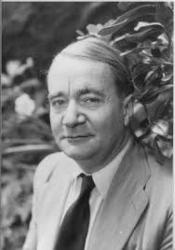
Immanuel Fichte
 Germany
- Immanuel Fichte: German Idealist Philosopher
- Professorship and Journal Editorship
- Striving for Philosophical Unity
- Collective Philosophical Work
- Idealism and the Absolute
- Critique of Pantheism
- The Empirical Foundation of the Absolute
- Epistemological Analysis
- The Graded Nature of Reality
- The Dynamic Interdependence of Reality
- The Eternity of the Real
- The Relationship Between Mind and Body
- Imagination and the Formation of the Body
- The Synthesis of Ideas and Personality
- The Role of Genius in History
- The Justification of Theism
- Indirect Knowledge of God
- God as a Transcendental Personal Being
- Creation and the Coordination of the World
- The Teleological Nature of Creation
- The Origin and Overcoming of Evil
Immanuel Fichte: German Idealist Philosopher
Founding the Journal for PhilosophyIn 1837, German philosopher Immanuel Fichte established the journal "Zeitschrift für Philosophie und speculative Theologie." While grappling with theological issues rooted in Christianity, the journal aimed to combat the prevalent pantheism influenced by Hegel's philosophy.
Professorship and Journal Editorship
Fichte held professorships in philosophy at Bonn and Tübingen. In 1837, he co-founded the journal, which was later renamed "Zeitschrift für Philosophie und philosophische Kritik" in 1847 and edited by Fichte, Johann Gottlieb Fichte (Jr.), and Hermann Ulrici. The journal extended its critique to the emerging currents of sensualism and materialism in Germany.
Striving for Philosophical Unity
A defining characteristic of Fichte's philosophical endeavors was his unwavering desire to unify disparate forces in the pursuit of a comprehensive philosophical worldview that could satisfy both scientific inquiry and ethical and religious sentiment. He attributed the fragmentation of philosophy to the isolation and individuality of its proponents.
Collective Philosophical Work
To address this fragmentation, Fichte advocated for a collaborative approach, where thinkers would systematically refine previous philosophical ideas and integrate genuine principles into a coherent system. Inspired by this vision, he issued an invitation for a philosophical congress in 1846, despite facing criticism and opposition.
Idealism and the Absolute
Fichte's philosophical perspective drew heavily from the idealistic systems of Fichte the Elder, Schelling, and Hegel. He acknowledged the "Science of Knowledge" as the starting point for his philosophical journey. Like Schelling and Hegel, he understood the world as a spiritual, idea-driven reality.
Critique of Pantheism
Nevertheless, Fichte vehemently opposed the pantheistic interpretations of his predecessors, particularly Hegel. He argued that their reliance on the concepts of the infinite and the absolute led them to reduce the finite to merely temporal manifestations of the infinite. Such a view, he believed, neglected the enduring nature of the finite.
The Empirical Foundation of the Absolute
In contrast, Fichte's approach emphasized the development of the idea of the absolute through the study of finite entities. The absolute became a problem solved through the analysis of empirical data. This approach, he argued, provided a more accurate understanding of the world, emphasizing the concept of individuality.
Epistemological Analysis
Fichte's epistemological analysis distinguished between the external, phenomenal aspects of finite things and their internal, substantial essence. This substantial essence was not a universal, unchanging foundation but a multiplicity of unique individuals. These individuals were not to be understood in materialist terms, but rather as spiritual realities.
The Graded Nature of Reality
All reality, according to Fichte, constitutes a continuous gradation of individual beings (Realwesen). Their differences arose from the complexity of their content, their developmental potential, and their excitability. Consciousness emerged as a result of high excitability.
The Dynamic Interdependence of Reality
Thus, the conscious mind and the realities underlying the phenomena of inert matter shared a fundamental spiritual nature. Each reality possesses its own qualitative characteristic, varying in intensity. In their interactions, these intensities manifest as force. Fichte argued against the existence of a universal force, recognizing only specific, qualitatively determined forces. Force formed the basis for all quantitative determinations, which in turn manifested as extensiveness and intensity, ultimately reflected in physical form.
The Eternity of the Real
Fichte maintained the eternity of all real beings, adopting a monadological perspective. However, he deviated from Leibniz by acknowledging the interaction between individual realities, or monads. He believed that interaction was essential for life, as individual beings left to themselves remained inert.
The Relationship Between Mind and Body
Fichte's philosophical system included a theory of the mind and its relationship to the body. In his work "Psychologie," he posited the soul as the organizing principle of the body, existing before it and surviving its destruction. By asserting the pre-conscious existence of the soul, Fichte sought to reconcile his views with Kant's theory of a priori principles of knowledge.
Imagination and the Formation of the Body
Fichte considered the body to be a product of the soul. He separated the body into two components: the external body, consisting of material substances temporarily incorporated into the organism, and the internal body, a permanent principle that structured and maintained the external body. Imagination, according to Fichte, played a crucial role in bodily formation, spatially coordinating external realities with the soul's intentions.
The Synthesis of Ideas and Personality
Fichte's theory of "genius" underlined the unique combination of ideas within each individual. Human nature, he argued, was not only defined by universal forms of thought but also by a distinctive blend of ideas forming a central point in one's soul. This uniqueness, or genius, acted as a driving force, coordinating and subordinating lower desires. Genius, Fichte believed, was inherent in all humans, even if it remained hidden or undeveloped.
The Role of Genius in History
Great historical figures exerted their influence because their genius resonated with that of others, enabling them to shape society and the course of history. Fichte categorized genius into two types: productive and receptive. Genius immortalizes individuals, distinguishing them from animals.
The Justification of Theism
Fichte dedicated significant works to the defense of theism, including "Speculative Theology" and "The Theistic View of the World and Its Justification." He argued that the idea of God as the ultimate ground of existence emerges from observing the collective reality. The world is not a mere aggregate of entities but a coherent, ordered system. Since neither individual realities nor their sum can account for this order, Fichte posited a unified, organizing principle, which he identified as God.
Indirect Knowledge of God
Fichte maintained that human knowledge of God is indirect, gained through the study of individual realities. This knowledge, he emphasized, lacked direct perception and relied on pure speculation. Its essence lay in understanding God as the transcendent unity of the world.
God as a Transcendental Personal Being
Fichte's theism differentiated itself from pantheism by asserting God as a supra-worldly personal being. He rejected the notion that conceptualizing God as an absolute personality involved contradiction. According to Fichte, the narrow understanding of personality as finite and limited was erroneous. He also refuted the view that the existence of eternal, uncreated realities contradicted the concept of God's creativity.
Creation and the Coordination of the World
Fichte challenged the idea of creation as a temporal event. God, he argued, is the eternal creator of the world, not in the sense of bringing it into existence from nothing, but rather in the sense of establishing its overall coherence and order. While individual elements of the world exist eternally, their connectedness and development originate from God.
The Teleological Nature of Creation
Fichte emphasized the relationship between individual realities as one of means and ends. Inorganic nature serves as a means for the attainment of higher organic forms. The entire world, in its internal coordination, forms an unbroken chain of means and ends. Since God is the source of this coordination, the divine activity in relation to the world can be described as teleological.
The Origin and Overcoming of Evil
The original nature of things, Fichte contended, is directed towards ultimate goodness and perfection. Evil, or the improper, has an external and contingent origin. The possibility of deviations from the original developmental norm exists in every interaction between individual beings. However, the essence of this original sinless nature is never fully destroyed and remains a source of potential return to goodness. Complete moral renewal, however, requires divine assistance, which humanity received through Christ. Fichte addressed the question of why God permits evil by arguing that the concept of impropriety arises from the very notion of free will as self-determination. Preventing all deviations from the original good would have resulted in complete determinism, depriving the world of moral significance.