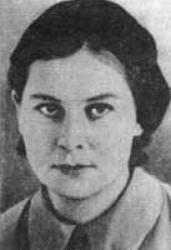
Arnold Mery
 Estonia
Biography of Arnold Meri
Arnold Konstantinovich Meri was born on July 1, 1919, in Tallinn. He is the only living Estonian Hero of the Soviet Union. Since 2004, he has been the Chairman of the Public Union Against Neo-Fascism and National Hostility in Estonia.
From 1960 to 1989, Meri worked as the Deputy and First Deputy Minister of Education of the Estonian SSR. Since 1979, he also served as the Chairman of the Presidium of the Estonian Society for Friendship and Cultural Relations with Foreign Countries. In the period from 1945 to 1949, Meri was the First Secretary of the Central Committee of the Estonian Komsomol. He participated in the Great Patriotic War and in 1941 became the first Estonian to be awarded the title of Hero of the Soviet Union.
In 1951, he was expelled from the Communist Party and stripped of his awards due to denunciation. However, in 1956, after the 20th Congress of the CPSU, he was rehabilitated. Meri has received numerous orders and medals for his service. He holds the rank of Colonel in the Soviet Army.
In May 2008, a trial began in Estonia, where Meri was accused of "genocide against the civilian population." Arnold Meri vehemently denied the charges.
From 1926, Meri lived with his family in Yugoslavia. He completed his primary education in Skopje and attended the Russian-Serbian Gymnasium in Belgrade. In 1938, he returned to Estonia and worked as an apprentice locksmith. He was conscripted into the Estonian army and joined the Communist Party in July 1940, after the establishment of Soviet power in Estonia. When the Estonian army was transformed into the 22nd Estonian Rifle Corps of the Red Army, Meri became the Deputy Political Officer of the 415th Separate Signal Battalion of the Corps.
From June 1941, Meri fought on the fronts of the Great Patriotic War. He displayed extraordinary courage during the defense of the Corps Headquarters near Porhov in the Pskov region on July 17, 1941. For this, he was awarded the title of Hero of the Soviet Union, becoming the first Estonian to receive this honor. After receiving medical treatment, Meri entered the Moscow Military Engineering School and completed a short course in 1942. He served as the Deputy Head of the Political Department in the 249th Estonian Division and the 8th Estonian Rifle Corps.
In June 1945, Meri was demobilized and appointed as the First Secretary of the Central Committee of the Estonian Komsomol in Tallinn. In 1949, he was sent to the Hiiumaa Island to oversee the deportation of Estonian families suspected of collaborating with the Nazis. Meri claimed that he was unable to obtain deportation lists from the NKVD and eventually resigned from his position.
In 1949, Meri became a student at the Higher Party School of the Central Committee of the CPSU in Moscow. In December 1951, he was expelled from the party and stripped of his Hero of the Soviet Union title. He was accused of passivity during the Hiiumaa deportation and involvement in anti-Soviet activities. After his expulsion, Meri worked as a carpenter, master, and technical director at a furniture factory in Tallinn. He was later forced to move to Gorno-Altaysk. In 1956, he was reinstated in the party and his awards were restored following an appeal to the 20th Congress of the CPSU. From 1958, Meri taught political economy at the Gorno-Altai Pedagogical Institute and became the dean of the institute. In 1960, he returned to Tallinn and held the positions of Deputy Minister and then First Deputy Minister of Education of the Estonian SSR. He retired in 1989.
Arnold Meri was awarded numerous orders and medals throughout his life.