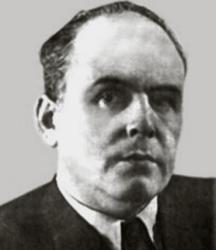
Artemij Voliunskij
 Russia
- Arsentiy Petrovich Volynskiy: A Distinguished Statesman
- Military Career and Diplomatic Missions
- Administration in Astrakhan and Marriage to Anna's Cousin
- Fall from Grace and Failed Persian Expedition
- Recovery and Political Activities
- Career under Empress Anna
- Downfall and Execution
Arsentiy Petrovich Volynskiy: A Distinguished Statesman
Early Life and EducationArsentiy Petrovich Volynskiy (1689-1740) hailed from a noble lineage, with his father, Petr Artemyevich, serving as a steward, a courtier, and a judge under Tsar Fyodor III. Volynskiy possessed a keen intellect and pursued a wide range of interests. He was renowned for his exceptional writing skills and maintained an impressive personal library.
Military Career and Diplomatic Missions
In 1704, Volynskiy joined a dragoon regiment as a soldier. By 1711, he had risen to the rank of captain and had earned the favor of Tsar Peter the Great. During the disastrous Prut Campaign in 1712, Volynskiy fought alongside Vice-Chancellor Shafirov and was taken prisoner in Constantinople.
Upon his release, Peter entrusted Volynskiy with a diplomatic mission to Persia in 1715. His objectives were to gather political and economic intelligence and secure trade privileges for Russian merchants. Volynskiy successfully accomplished both goals and was promoted to general adjutant and appointed governor of the newly established Astrakhan province in 1719.
Administration in Astrakhan and Marriage to Anna's Cousin
In Astrakhan, Volynskiy implemented administrative reforms, improved relations with the Kalmyks, and fostered economic development. His marriage to Alexandra Lvovna Naryshkina, a cousin of Peter the Great, further elevated his status.
Fall from Grace and Failed Persian Expedition
In 1722, the Persian expedition led by Volynskiy met with failure. His enemies accused him of providing false intelligence and engaging in bribery. Peter punished Volynskiy severely and stripped him of his authority. Empress Catherine I appointed Volynskiy as governor of Kazan and chief commander of the Kalmyks, but he was dismissed from these positions in the waning days of her reign.
Recovery and Political Activities
Under Peter II, Volynskiy regained favor through alliances with influential families and was reappointed as governor of Kazan. However, his greed and unscrupulous behavior reached their peak in this role, prompting the government to establish an "inquisition" to investigate his actions.
Despite his dismissal, Volynskiy received a new appointment in Persia in 1730. He later became a military inspector under General Minich. Volynskiy's political views aligned with the defense of aristocratic interests and opposition to the influence of foreign dignitaries such as Minich, Loewenwolde, and Biron.
Career under Empress Anna
In 1733, Volynskiy commanded a unit during the siege of Danzig. He was later appointed chief huntsman in 1736 and sent as a minister to the Nemirov peace negotiations with Turkey in 1737. In 1738, he became cabinet minister.
Volynskiy's reforms to the cabinet and his efforts to control the military, admiralty, and foreign affairs boards earned him the ire of Vice-Chancellor Osterman. Despite his attempts to ingratiate himself with Empress Anna, Volynskiy's alleged mistreatment of Tredyakovsky and rumors of his seditious speeches sealed his fate.
Downfall and Execution
In 1740, Volynskiy was accused of embezzlement and treason. Under torture, his "confidants" implicated him in plans to overthrow the government. Volynskiy steadfastly denied these charges, but the empress ordered a general assembly to try him. The assembly condemned Volynskiy to be impaled alive, his tongue cut out, and his properties confiscated.
On June 27, 1740, Volynskiy was executed along with three of his confidants. The other "confidants" were exiled. Volynskiy's legacy remains complex, as he was both a talented statesman known for his reforms and an ambitious individual accused of treason and corruption.