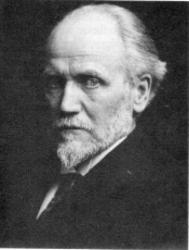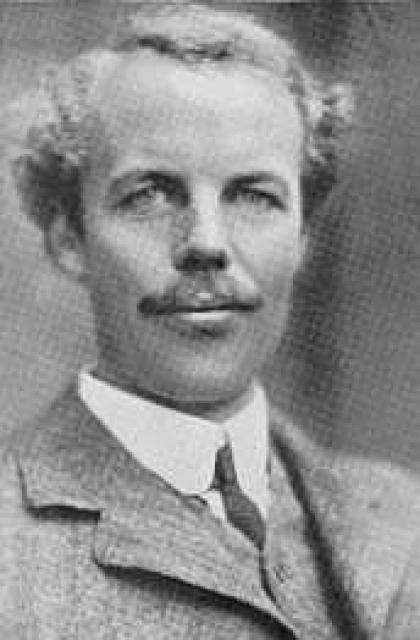
Arthur Cecil Pigou
 Great Britain
- Biography of Arthur Cecil Pigou
- Early Life and Education
- Professional Contributions
- Contributions to Economic Theory
- Death
Biography of Arthur Cecil Pigou
Arthur Cecil Pigou (1877–1959) was an English economist known for his contributions to both practical and theoretical aspects of economics and social policy. He gained widespread recognition for his work in the field of welfare economics.
Early Life and Education
Arthur Cecil Pigou was born on November 18, 1877, in Ryde, Isle of Wight, England. He was a prominent figure in the Cambridge Neoclassical School and a disciple and follower of Alfred Marshall, the founder of this school. Pigou specialized in the study of mathematics and history at King's College, Cambridge University, and after graduation, he joined the faculty of political economy. In 1908, Pigou succeeded Alfred Marshall as the head of the department and held this position until 1943.
Professional Contributions
Throughout his career, Pigou was actively involved in practical economic issues and the development of various aspects of economic and social policy. He served as a member of the Currency Committee in 1918-1919, the Royal Commission on Income Tax in 1919-1920, and Chamberlain's Committee on Monetary Policy in 1924-1925.
Pigou also conducted theoretical research and gained significant recognition for his work in welfare economics. His major work, "The Economics of Welfare" published in 1920, attempted to merge the late Ricardian teachings with the ideas of the marginal utility school. This work became the foundation for social reforms carried out by the Labour Party in Britain and contributed to the development of numerous theories of general welfare. Other notable works by Pigou include "The Economics of Stationary States" (1935), "Employment and Equilibrium" (1949), and "Industrial Fluctuations" (1929).
Contributions to Economic Theory
Pigou's economic theory of welfare focused on the concept of national dividend, which refers to the portion of society's material income that can be expressed in monetary terms. He emphasized the importance of addressing social issues, such as labor, wages, and unemployment, as they directly impact the size and distribution of the national dividend and overall economic well-being. Pigou also studied cyclical fluctuations in the economy, attributing their main cause to changes in labor demand.
While acknowledging the role of the state in solving social problems, Pigou advocated for free competition in the economy and limited government intervention in economic affairs. He opposed state regulation of prices and resource distribution.
Death
Arthur Cecil Pigou passed away on March 7, 1959, in Cambridge, England.