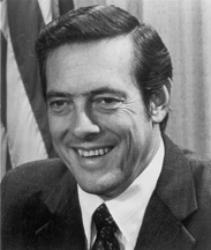
Friedrich Von Wieser
 Austria
Biography of Friedrich von Wieser
Friedrich von Wieser, an Austrian economist, was one of the representatives of the first generation of the Austrian School of Economics. The Austrian School of Economics, known as the "most powerful enemy of Marxism," gained popularity and influence that continues to this day. Von Wieser played a significant role in shaping and representing this school of thought.

Born in Vienna, Friedrich von Wieser was the son of Leopold von Wieser, a confidential advisor in the military ministry. Initially, Friedrich studied sociology and law. However, after obtaining his diploma, he abruptly shifted his focus to the study of economics. His encounter with the Austrian scientist Carl Menger and his work, "Principles of Economics," influenced this change. Von Wieser worked at the universities of Vienna and Prague before eventually replacing Menger at the University of Vienna. It is believed that Von Wieser, together with his stepbrother Eugen von Böhm-Bawerk, shaped the new generation of Austrian economists through their teachings. Their works and lessons influenced the likes of Ludwig von Mises, Friedrich Hayek, and Joseph Schumpeter.
In 1917, Friedrich von Wieser became the Austrian Minister of Finance. Among his numerous works, two are particularly renowned: "Natural Value" and "Social Economics." In "Natural Value," von Wieser presented his theory of alternative costs and imputation theory. In "Social Economics," he attempted to apply these theories in practice, albeit somewhat controversially. His interpretation of the theory of marginal utility was of great interest, especially in terms of terminology. It is believed that his introduction of the term "Grenznutzen" (marginal utility) later became the standard terminology.
During his time, von Wieser directly contributed to the beginning of significant debates on the fundamental importance of accurate calculations in economic science. According to von Wieser, the importance of precision in calculations could not be overestimated. He argued that prices primarily provided information about market conditions and the current state of various markets, making them crucial for any analysis. One of the most unusual implications of this premise was the necessity of a price system even in a socialist economy. Von Wieser also emphasized the importance of entrepreneurs in economic changes. He believed that such changes primarily occurred due to the heroic intervention of individuals capable of leading others "to new economic shores." This concept of leadership was further expanded by Joseph Schumpeter in his study of economic innovation.
Unlike most economists of the Austrian School, Friedrich von Wieser rejected classical liberalism and insisted on the need to maintain freedom within an orderly system. This idea, combined with his emphasis on the importance of individuals in history, was best described in his last book, "The Law of Power." Friedrich von Wieser passed away on July 22, 1926, just two weeks after his 75th birthday.