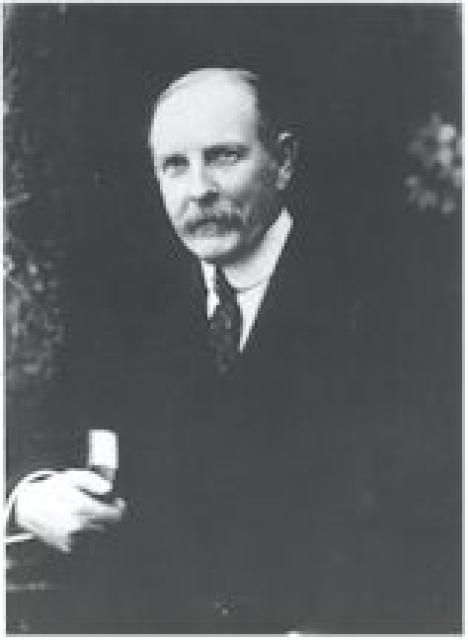
Arthur E. Kennelly
 USA
USABiography of Arthur E. Kennelly
Arthur Edwin Kennelly, an American-Irish electrical engineer, was born on December 17, 1861, in Colaba South Mumbai, India. He was the son of Irish naval officer David Joseph Kennelly and Catherine Gibson Heycock. Sadly, Kennelly's mother passed away when he was only three years old. In 1863, his father left the navy and moved with Kennelly to England. In 1878, David married Ellen L. Spencer and the family relocated to Sydney, Nova Scotia, where he began managing a railway company. Kennelly gained four siblings from his father's third marriage, which took place from 1881 to 1885.
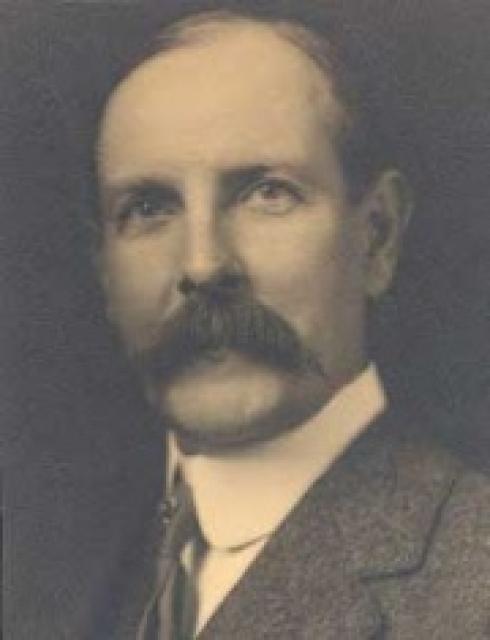
Education and Career
Kennelly attended University College School in London. In December 1887, he joined Thomas Edison's West Orange laboratory, where he stayed until March 1894. During this period, Kennelly and Harold P. Brown devised a method of execution using alternating current, essentially "improving" the electric chair to demonstrate the dangers of alternating current compared to direct current. Kennelly later established his own consulting firm in electronics with Edwin Houston. Together, they wrote works such as "Alternating Electric Currents" in 1895, "Electrical Engineering leaflets" in 1896, and "Electric arc lighting" in 1902.
In 1893, while conducting research in electrical engineering, Arthur presented his work titled "Impedance" to the American Institute of Electrical Engineers (AIEE). He explored the application of complex numbers for Ohm's law in the theory of alternating current circuits. In 1902, Kennelly studied the electrical properties of the radio frequency spectrum in the ionosphere, resulting in the formation of the idea of ionized plasma. This contributed to the discovery of the Kennelly-Heaviside layer. In the same year, Kennelly provided engineering machinery for an expedition that laid an underwater cable line along the Mexican route Vera Cruz-Frontera-Campeche. He also worked for the Mexican government as an inspector, overseeing cable production.
From 1902 to 1930, Arthur served as a professor of electrical engineering at Harvard University, and from 1913 to 1924, he worked at the Massachusetts Institute of Technology. One of his students was Vannevar Bush, a renowned mathematician and engineering practitioner. In 1912, Kennelly expanded the content of applied mathematics by combining the theory of hyperbolic angle and hyperbolic functions, first in a course at the University of London and later in a book he authored. Kennelly actively participated in various professional organizations, including the Society for the Promotion of the Metric System, Illuminating Engineering Society, and the International Electrotechnical Commission of the United States National Committee. From 1898 to 1900, he served as the president of the American Institute of Electrical Engineers, and in 1916, he led the Institute of Radio Engineers.
Contributions and Awards
Kennelly made significant contributions to the field of radio wave propagation and the theory and methods of voltage measurement in alternating current circuits. For his research and accomplishments, he received numerous awards, including the Edward Longstreth Medal in 1917 and the Howard N. Potts Medal in 1918. In 1932, Kennelly was honored with the Order of Honor from the Institute of Radio Engineers.
Legacy and Death
Arthur E. Kennelly passed away on June 18, 1939, in Boston, Massachusetts. He left behind a remarkable legacy as a pioneering electrical engineer and scientist whose contributions greatly advanced the understanding and application of electrical principles and technologies.


