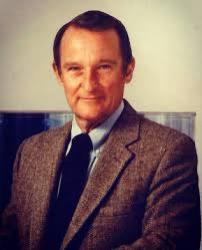
Kalman Kando
 Hungary
- Kálmán Kandó: Pioneer of Electric Traction
- Naval Career and Engineering Experience
- Invention of Electric Traction
- International Recognition
- Later Life and Accomplishments
- Legacy
Kálmán Kandó: Pioneer of Electric Traction
Early Life and EducationKálmán Kandó, a Hungarian electrical engineer and scientist, was born on July 10, 1869, in Pest, Hungary. He initially studied at the Budapest-Fasori Evangelical Gymnasium before enrolling at the Budapest University of Technology, where he earned a degree in mechanical engineering.
Naval Career and Engineering Experience
Kandó served as a volunteer in the Austro-Hungarian Navy for a year. Subsequently, he worked as an engineer in France, designing and developing asynchronous motors invented by Nikola Tesla.
Invention of Electric Traction
In 1894, Kandó made a groundbreaking invention: a high-voltage, three-phase AC motor and alternating current generator for electric locomotives. This earned him the title "Father of the Electric Train." In Hungary, the electrification of railways began with electric locomotives equipped with motors manufactured by the Ganz factory in Budapest.
International Recognition
Between 1896 and 1898, Kandó's motors were first employed in the tramcars of Évian-les-Bains, France, generating 37 horsepower. Following his success, they were adopted by other European countries, including Italy and England. The Valtellina railway line in Italy became the first electrified mainline railway in Europe in 1902. In 1926, Kandó's 1.5 kV DC motors were used on the Paris-Orléans line.
Later Life and Accomplishments
Towards the end of his life, Kandó returned to Budapest and became the managing director of the Ganz factory. He was awarded the Order of the Crown of Italy and an honorary doctorate from the Budapest University of Technology. He passed away in Budapest on January 13, 1931.
Legacy
The fundamental principles of modern AC electric locomotives remain unchanged from those developed by Kálmán Kandó. His visionary work revolutionized transportation and continues to shape the modern railway system.