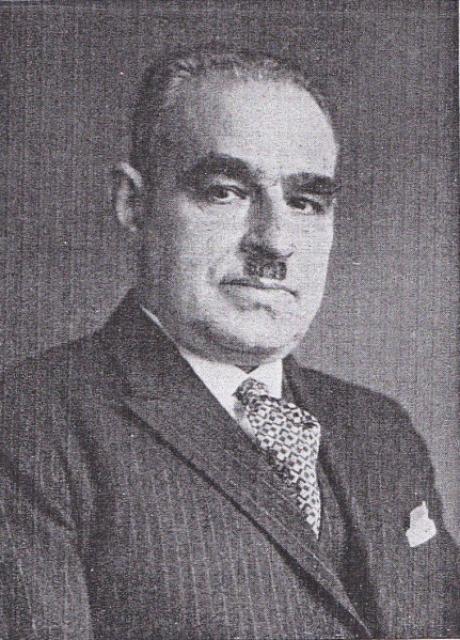
Arthur Korn
 Germany
- Early Life and Education
- Scientific Career in Germany
- Invention of the Photoelectric Imager
- Phototelegraph and Image Transmission
- Contributions to Television
- Founding of Facsimile and Image Transmission
- Recognition and Honors
- Forced Emigration and Later Years
Early Life and Education
Arthur Korn was born on May 20, 1870, in Breslau, Prussia, into a Jewish family. He pursued higher education at the University of Leipzig, where he studied physics and mathematics, graduating in 1890. Subsequently, he furthered his studies in Berlin, Paris, London, and Würzburg.
Scientific Career in Germany
In 1895, Korn commenced his academic career as a university lecturer and later became a professor at the University of Munich in 1903.
Invention of the Photoelectric Imager
In 1900, Korn developed an innovative electrical sensor that could differentiate between light and dark areas on paper. This invention served as the foundation for several groundbreaking communication devices.
Phototelegraph and Image Transmission
Between 1903 and 1906, Korn revolutionized communication with his phototelegraph, a device that mechanically scanned and transmitted images. On November 6, 1906, he successfully transmitted a portrait of himself over 1000 kilometers, demonstrating the feasibility of modern drum scanners.
Contributions to Television
In 1904, Korn successfully transmitted photographs over telephone lines from Munich to Nuremberg. Utilizing Nikola Tesla's high-frequency transformers, Korn's tube was capable of reproducing moving images on a television screen.
Founding of Facsimile and Image Transmission
Korn's groundbreaking work in phototelegraph culminated in the invention of facsimile machines in 1906. In 1907, he transmitted his own photograph from Germany to England using his photoelectric sensor.
Recognition and Honors
Korn's scientific achievements garnered him recognition and honors. He became a member of the prestigious Leopoldina Academy in 1907 and was awarded an honorary doctorate by the Technical University of Breslau in 1930.
Forced Emigration and Later Years
As a Jewish scientist, Korn faced persecution and discrimination during the Nazi era. He was forced to leave his post at the university in 1933 or 1935. In 1939, he emigrated to the United States with his family and taught physics and mathematics at the Stevens Institute of Technology in Hoboken, New Jersey. Korn passed away on December 22, 1945, in Jersey City, New Jersey.


