Arthur Sullivan
 Great Britain
- Biography of Arthur Sullivan
- Early Life and Musical Talent
- Early Works
- Collaboration with Gilbert
- The Savoy Operas
- Legacy and Recognition
- Final Years and Death
Biography of Arthur Sullivan
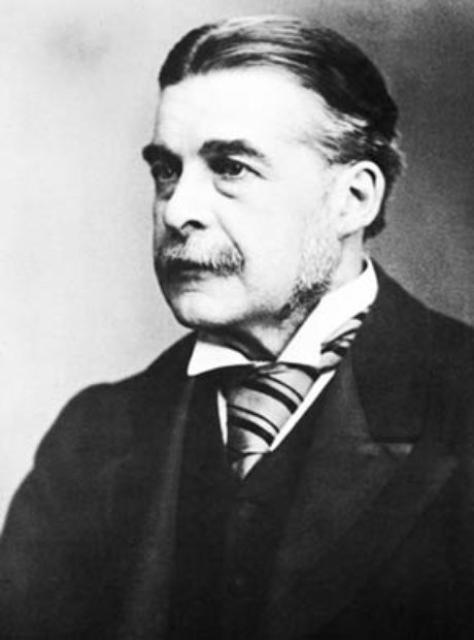
Arthur Seymour Sullivan was born in London on May 13, 1842. He was an English composer and the author of widely known operettas, written in collaboration with librettist W. Gilbert. Sullivan's extensive and diverse legacy also includes over 250 choruses, romances, ballads, oratorios, cantatas, instrumental compositions, as well as one symphony and one grand opera.
Early Life and Musical Talent
Sullivan's exceptional musical talent manifested itself at an early age. At the age of 8, he composed a ballad, and at 12, he began singing in the choir of the Royal Chapel. At the age of 14, he won a scholarship competition, which allowed him to complete his musical education in Leipzig.
Early Works
In 1861, Sullivan's first significant work was published - the music for Shakespeare's "The Tempest". In 1867, he composed his first operetta, "The Contrabandista". Two years later, his first oratorio, "The Prodigal Son", was premiered.
Collaboration with Gilbert
In 1871, Sullivan added two more compositions to his extensive list of works, which ensured his immortality. He wrote the music to the hymn "Onward, Christian Soldiers", which became beloved and sung by millions of people around the world. Following this, Sullivan began collaborating with the talented satirist and playwright W. Gilbert. Together, they caused a sensation in the English-speaking world with their comic opera "Thespis", the first of 14 operettas they would create.
The Savoy Operas
Their second work, "Trial by Jury" (1875), was produced with the assistance of the brilliant impresario R. D'Oyly Carte, who became a close friend of Sullivan and the partner of both the composer and librettist in all their subsequent endeavors. In 1881, Carte built a special theatre called the "Savoy" for the production of Gilbert and Sullivan's works, hence the name "Savoy operas".
Legacy and Recognition
Sullivan's melodic inventiveness was inexhaustible. His vibrant music resounded in every English home, and his name was held in high regard among the royal family, where the composer was a welcomed guest, as well as among London street musicians. His songs, such as "Lost Chord", were sung everywhere. In 1883, Queen Victoria knighted Sullivan. He conducted at festivals, including performances of his major choral compositions such as "The Prodigal Son", "The Light of the World", "The Martyr of Antioch", and "The Golden Legend".
Final Years and Death
Some argue that Sullivan's best work is the operetta "The Mikado" (1885), while others consider "The Yeomen of the Guard" (1888) as unrivaled. His only grand opera, "Ivanhoe", was premiered in 1891 and ran for 155 performances. It was his operettas that contributed to Sullivan's enduring fame, with his "serious" music mostly forgotten. Arthur Sullivan passed away in London on November 22, 1900.