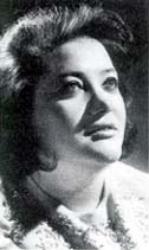
Artur Rinne
 Estonia
Biography of Artur Rinne
Artur Rinne was an Estonian opera and pop singer, and a distinguished artist of the Estonian SSR. He was born on September 25, 1910, in Narva, into a family of a locomotive engineer at the Narva depot. Rinne's mother was involved in sewing, handicrafts, and managing the household. He spent his childhood in Narva, where he attended school, sang in the choir, played in the orchestra, and worked as a postman.
Education and Career
In 1927, Rinne became a student at the Tallinn Conservatory, and two years later, he joined the choir. After five years, he became a soloist at the "Estonia" theater. From 1945 to 1949, he worked as a set designer at the "Vanemuine" theater. In March 1949, Rinne was deported from Estonia to Siberia, where he spent seven years. He was rehabilitated in 1956.
Accomplishments
In 1960, Artur Rinne was awarded the honorary title of "Distinguished Artist of the Estonian SSR." He passed away in Tallinn on August 31, 1984, leaving behind a significant artistic legacy. As an opera singer, he was known for his performances in roles such as Figaro in "The Barber of Seville," Tonio in "Pagliacci," Papageno in "The Magic Flute," and Rigoletto in "Rigoletto." He also created television films like "An Evening of Waltz," "A Day Full of Songs," and "Georg Ots Sings." Rinne maintained a personal friendship and creative partnership with Georg Ots for many years. His concert performances are captured on four long-playing records. In addition, Artur Rinne was the author of books such as "When I Was Little," "Songs and Years," and "And the Cuckoo Will Sing."