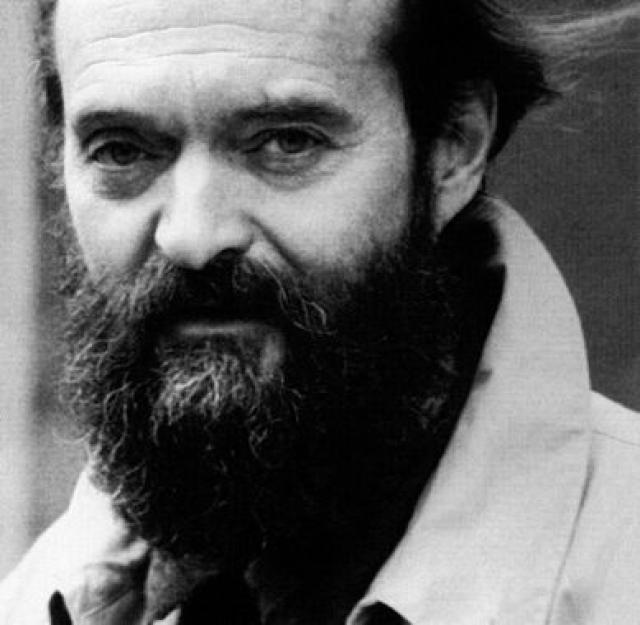
Arvo Pyart
 Estonia
Biography of Arvo Pärt
Arvo Pärt is a contemporary Estonian composer, born on September 11, 1935, in Paide, near Tallinn. He completed his studies in composition at the Tallinn Conservatory under the guidance of Heino Eller in 1957.
After graduating, Pärt worked as a sound engineer for Estonian Radio until 1968. It was during this time, in 1964, that he first began incorporating collage techniques into his compositions. Around the same period, religious motifs started to emerge in his music. Due to censorship regulations, some of his works were performed under fictional titles.
In 1979, Pärt emigrated from the Soviet Union and initially settled in Vienna, where he signed a contract with Universal Edition. Later, he moved to Berlin with the support of a DAAD scholarship (Deutsche Akademische Austauschdienst). In Berlin, he lived and composed works for keyboard instruments, instrumental ensembles, vocal and choral music.
Pärt is a devout Orthodox Christian and was baptized as Arvo. His mature works are often classified as "sacred minimalism" along with composers such as Henryk Górecki, Peteris Vasks, John Tavener, and Giya Kancheli, and they are also associated with the new consonant music movement.
Pärt's music is actively used in contemporary art house cinema, including films such as "Confession" and "The Banishment." He has received numerous awards and honors for his contributions to music. These include honorary doctorates from the Music Academy of Tallinn and the University of Tartu, honorary membership in the Royal Swedish Academy of Music, the TRIUMPH Prize in Moscow, and a Grammy Award for "Best Contemporary Composition" for his work "Cantus in Memoriam Benjamin Britten" for mixed choir.
Below are some of Pärt's orchestral compositions:
- "Nekrolog" for orchestra, op.5 (1960)
- Symphony No. 1, op.9 (1963)
- "Perpetuum mobile" for orchestra, op.10 (1963)
- Symphony No. 2 (1966)
- Symphony No. 3 (1971)
- "Wenn Bach Bienen gezüchtet hätte…" for piano, wind quintet, string orchestra, and percussion (1976)
- "Fratres" for chamber ensemble (1976 and later, with many versions)
- "Arbos" for brass and percussion (1977/1986)
- "Cantus" in memory of Benjamin Britten, for string orchestra and bells (1977)
- "Psalm" for string orchestra (1985/1995/1997)
- "Festina Lente" for string orchestra and harp (1988)
- "Summa" for string orchestra (1991)
- "Silouans Song" for string orchestra (1991)
- "Trisagion" for string orchestra (1992)
- "Mein Weg" for 14 strings and percussion (1999)
- "East and West" for string orchestra (2000)
- "Lennartile / Für Lennart" for string orchestra (2006)
- "La Sindone" for orchestra and percussion (2006)