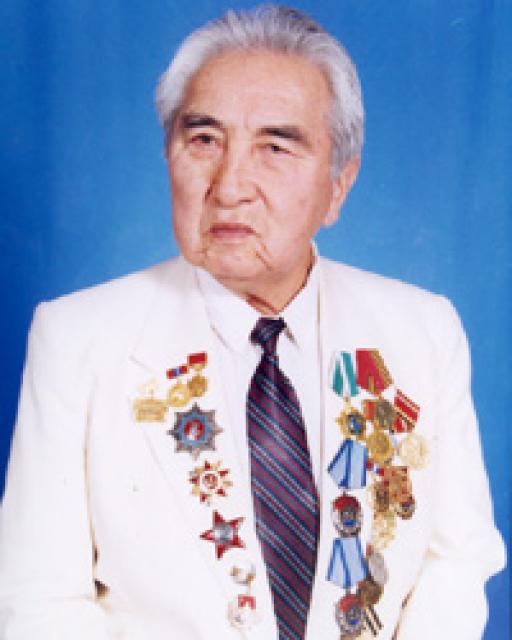
Asanhan Dzumahmatov
 Kyrgyzstan
Biography of Asankhan Dzhumakhmatov
Asankhan Dzhumakhmatov is a renowned Soviet conductor and People's Artist of the USSR. He was born on June 16, 1923, in a small village called Issyk-Ata in the Chui region of the Kyrgyz Republic. Despite facing difficulties from a young age, Dzhumakhmatov's talent and passion for music flourished.
Early Life and Education
Dzhumakhmatov's father, Jumakmat Chalov, was an educated and prosperous man until he was arrested in 1926 and sent to Siberia, resulting in the confiscation of their property. When Dzhumakhmatov was six years old, he and his mother and older brother were exiled to Ukraine. It was during his time in Ukraine, particularly in the village of Chalbassy, that Dzhumakhmatov started seriously studying and playing music. He played the guitar in a local orchestra and later focused on percussion instruments.
In 1938, after nearly eight years in Ukraine, Dzhumakhmatov returned to his homeland and enrolled in the preparatory department of a pedagogical college. He also became an artist in the first Kyrgyz musical and dramatic theater, which later became the Academic Theater of Opera and Ballet named after Abdylas Maldybaev. His musical talent was recognized, and he was included in the delegation of artists from the republic for the first Kyrgyz Art Decade in Moscow in 1939. This trip and the opportunity to interact with prominent musicians became a turning point in Dzhumakhmatov's life.
Music Career
In September 1941, the State Symphony Orchestra of the USSR was evacuated to Frunze (now Bishkek), and Dzhumakhmatov joined as a percussionist. However, he was soon called to serve in the Red Army during the Great Patriotic War and fought on the front lines. He was severely wounded and received several military awards for his bravery.
After being discharged from the army in 1944, Dzhumakhmatov became an artist in the Kyrgyz Theater of Opera and Ballet. In 1945, he began studying at the national department of the Moscow Conservatory named after P.I. Tchaikovsky, specializing in conducting. Even as a student, Dzhumakhmatov conducted the student orchestra with great success. After completing his studies in 1948, he was appointed as the chief conductor of the Kyrgyz Theater of Opera and Ballet.
Dzhumakhmatov recognized the need for further education to become a true master conductor. In 1952, he returned to Moscow Conservatory to study opera and symphonic conducting under the guidance of Boris Khaykin, a renowned Soviet conductor. This period of study allowed Dzhumakhmatov to refine his skills and develop his unique conducting style. He also had the opportunity to work with other esteemed professors, including Ginzburg, Evseev, Vasilenko, and Khortukanov.
Throughout his career, Dzhumakhmatov conducted over 50 operas and ballets from world, Russian, Kyrgyz, and Soviet classics. He played a pivotal role in the development of national opera and ballet art, directing groundbreaking productions of renowned works. His repertoire included famous operas such as "Aida" by Verdi, "Boris Godunov" by Mussorgsky, and "Tosca" by Puccini. He also collaborated with internationally acclaimed vocalists, including Irina Arkhipova, Elena Obraztsova, and Natalia Shemchuk.
Later Years and Achievements
In addition to his work in the opera and ballet sphere, Dzhumakhmatov served as the artistic director and chief conductor of the State Academic Orchestra of Kyrgyz National Instruments named after Karamoldo Orozov from 1962 to 1983. Under his leadership, the orchestra gained recognition and performed both traditional Kyrgyz and classical compositions. Dzhumakhmatov's arrangements of Kyrgyz folk songs and instrumental pieces are still part of the orchestra's repertoire.
In 1972, Dzhumakhmatov became the artistic director and chief conductor of the Kyrgyz Theater of Opera and Ballet. He led the theater in producing numerous operas and ballets and contributed significantly to the development of the national opera and ballet art. His productions included works by renowned composers such as Prokofiev, Tchaikovsky, and Stravinsky.
In 1989, Dzhumakhmatov assumed the position of chief conductor of the State Chamber Orchestra "Nasykat." In this role, he explored the world of traditional Kyrgyz music and introduced new interpretations of folk melodies through orchestral arrangements. The chamber orchestra represented Soviet and Kyrgyz art at international festivals and performed for esteemed foreign guests.
Dzhumakhmatov's exceptional contributions to the development of world, Soviet, and Kyrgyz arts earned him numerous accolades and honors. He was awarded the titles of People's Artist of the Kirghiz SSR (1971) and People's Artist of the USSR (1976). He also received the State Prize of the Kyrgyz SSR named after Toktogul (1972) and the International Chingiz Aitmatov Prize (1999). Dzhumakhmatov was decorated with the Order of Friendship, the national Kyrgyz Order of Manas III degree, the Zhukov Medal, the Sergei Rachmaninoff Medal, and many others.
Even in his spare time, Dzhumakhmatov dedicates himself to collecting, arranging, and performing folk melodies and works by Kyrgyz musicians. He leads a disciplined lifestyle, adhering to strict routines and maintaining a healthy and active lifestyle.
Asankhan Dzhumakhmatov continues to live and work in Bishkek, Kyrgyzstan, leaving an indelible mark on the world of music and the development of the Kyrgyz arts.


