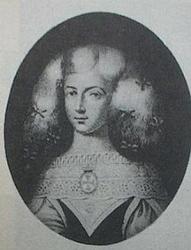
Aspazia
 Greece
Biography of Aspasia
Some historians believe that Aspasia came to Athens with the sole purpose of conquering Pericles, the "noblest of all Hellenes." In approximately 455 BC, during the 82nd Olympiad, a beautiful girl arrived in Athens from Megara to establish her own rhetoric school. She was accompanied by several young Greek women. Their appearance caused a sensation. It was soon discovered that the newcomers were Corinthian courtesans, led by a Milesian hetaera named Aspasia. They all lived together, engaged in politics, philosophy, and the arts, and willingly allowed anyone who wished to attend their meetings. The curious Athenians, unaccustomed to such spectacles, began to visit the hospitable house out of mere curiosity, attracted by the beauty of the visiting women, and then started attending it, fascinated by the discussions taking place there. In Aspasia's salon, philosophers such as Anaxagoras with his disciple Euripides, the zealous woman-hater, Zeno, Protagoras, the physician Hippocrates, the sculptor Phidias, and most often, Socrates could be found. The speeches delivered there and the debates that arose! How much pleasure the beautiful Corinthian women promised to the Athenian husbands who attended their gatherings, led by the "charming Milesian" Aspasia! Her intellect, common sense, eloquence, ability to listen and engage in debates inevitably compelled the attendees to listen attentively to the speeches of this extraordinary beauty. Aspasia was keenly interested in new philosophical currents and knew how to use them in her conversations, to the point that everyone involuntarily noted the life-giving originality of her mind. Socrates, a twenty-year-old youth with a rough appearance and a passionate soul, fell in love with Aspasia and never left her side. Later, when he became a famous philosopher, he said that he owed it all to Aspasia.
The Salon of Aspasia
Many secluded wives wanted to meet this amazing woman. The most determined ones attended Aspasia's gatherings. The main topic of conversation among women was marriage. "The Milesian hetaera" found the conditions of modern marriage outrageous. "Every woman," she instilled, "should be free to choose a husband and not be forced to marry someone chosen by her parents or guardians; a husband should educate his wife and allow her to express her thoughts." Men did not share Aspasia's bold views, but their wives were delighted and listened to the hetaira as if she were an oracle. Aspasia had heard of Pericles long before, even in Miletus. But what she knew about him was what everyone knew: he was one of the ten Athenian leaders, or strategoi, and his power was not so great in formal terms, but it was he who made many important decisions, declared wars on neighboring states, and concluded alliances with them. She also knew that Pericles came from the noble Alcmaeonid family.
The Meeting of Aspasia and Pericles
As a true woman, she wanted not only to hear about him but also to see him. Aspasia met the leader on the street, and, it must be said, he did not impress her imagination in any way. Pericles was neither handsome nor majestic; he walked with a calm, steady pace, and when he responded to greetings, he raised his right hand so as not to disrupt the line that traced the folds of his cloak. Some historians are inclined to believe that Aspasia came to Athens with the sole purpose of conquering Pericles, this "noblest of all Hellenes."
Of course, in turn, such a woman could not fail to interest Pericles. At that time, he was already in his forties, had two sons from his lawful wife, and, having fulfilled his duty to society, began to be burdened by marital ties, secretly dreaming of finding a soulmate. One day, Socrates, a close friend of the ruler, who did not hesitate to call the "charming Milesian" his incomparable teacher, suggested that Pericles visit her salon. The proposal corresponded to the desires of the statesman, and Aspasia had the pleasure of hosting the man whom the Athenians called the Olympian. Zeus had found his Hera! These two great minds of the era immediately felt attracted to each other. Who knows what Pericles would have become without Aspasia, and what Aspasia would have become without Pericles!
The ruler of Athens believed that no one could teach him anything anymore. But in the company of this woman, he suddenly discovered many things that he had not even suspected before. Aspasia's eyes, those of the new Aphrodite, illuminated the darkness of his own life; now she appeared to Pericles as poor and lonely. However, the position of a mistress did not satisfy the ambitious Aspasia. She found it demeaning to be just a concubine of Pericles, without the right to the respect enjoyed by the lawful wives of Athenian citizens, who were only capable of bearing children in practice. Pericles, enchanted by the intellect and beauty of his lover, fully shared her opinion and one fine day divorced his wife, giving her a dowry and finding her a worthy husband, although he kept his sons with him. Thus, Aspasia's desire was fulfilled! She became the wife of the Olympian and, settling in his house, immediately turned it into a political salon, allowing famous guests of Pericles to cross the sacred threshold of the female half.
Was she Pericles' wife? Some confirm, others deny the possibility of such a marriage. It is known that any Athenian citizen was allowed to openly have a courtesan, regardless of her nationality, but it was forbidden to marry a foreign woman. Those who violated the law were severely punished: the wife was sold as a slave, the husband, in addition to paying a huge fine, lost all his civil rights, and their children were recognized as illegitimate and stripped of the title of Athenian. To a large extent, Pericles himself was the creator of such chauvinistic laws. Until he met Aspasia, he was a fervent advocate of the "purity" of marriage. Love made him forget everything. For the first time, he questioned his own principles.
The Athenians adhered to the following principle at that time: "... courtesans are needed to satisfy our flesh, hetairae - for pleasure, and wives - to bear us legitimate children" (Demosthenes). And suddenly, everyone saw the embodiment of great, sincere love, not even anticipated by the poets. The tenderness of these "two people, who remembered every detail of each other's lives, was capable of ennobling even the basest. Pericles' male severity harmoniously combined with Aspasia's softness and refined femininity.
When Aspasia gave birth to a son, he was recognized as illegitimate, which suggests that Aspasia was only the mistress of the ruler of Athens and not his wife. However, on the other hand, Pericles openly called the "charming Milesian" his spouse, publicly kissing her during meetings and farewells, and it is unlikely that he would risk doing so, knowing the severe Athenian laws...
But even if Aspasia was only the mistress of Pericles, the majority of Athenians respected her as the wife of their patron, possessing, together with the freedom of a courtesan, the status of a lawful wife. For Socrates, Phidias, and Anaxagoras, she was a loyal, intelligent friend, and for Pericles, she was a lover and wife, the joy of his life, the charm of his hearth and the confidante in his affairs. She knew the secret of words that smoothed wrinkles, love that comforted any sorrow, and caresses that intoxicated the mind.
The relationship between Pericles and Aspasia was the subject of mockery and insults from his political enemies. In particular, they claimed that Pericles' house had turned into a house of tolerance, filled with courtesans and even married Athenian women who, through their debauchery, helped their husbands in their political careers. Aspasia was considered the evil genius of Pericles, the muse behind his reckless politics and autocratic actions.
Where did the woman who turned Athens upside down come from? The biography of Aspasia is mainly composed of rumors and conjectures.
Early Life
Aspasia was the daughter of a certain Axiochus, a man of remarkable intelligence who had a beneficial influence on his close ones, which explains the talents and abilities of his daughter. Aspasia was born in the 76th Olympiad, around 475 BC, in the city of Miletus, one of the most prosperous cities on the Ionian coast. Miletus was famous for its philosophers and courtesans.
According to poets, she was abducted in her childhood and taken to Megara or Corinth, where she grew up as a slave of her kidnappers, who tried to corrupt her. However, thanks to her beauty and intellect, she managed to please a wealthy Athenian who bought her and granted her freedom. According to other sources, Aspasia did not travel anywhere from Miletus before arriving in Athens, where she lived as a courtesan. She tried to imitate the famous Phryne, who had fourteen lovers, the rulers of the city, and was given only to the most distinguished citizens. However, when speaking about Aspasia, most ancient authors mention no other men besides Pericles and Lysicles.
Aspasia was beautiful. There is no description of her appearance that has been preserved. But a bust has survived, on which her name is inscribed. The sculptor captured a young woman with a cloak thrown over her head, indicating her status as a matron. This beautiful face has nothing mystical about it; it touches deeply with the expression of restrained joy and undisturbed tranquility...
In 440 BC, Miletus and Samos divided the city of Priene between them. Pericles proposed that the warring parties send their delegates to Athens, but the rulers of Samos responded with a refusal. The Athenians began to prepare for war. It is said that Aspasia accompanied Pericles during this campaign with many courtesans, who earned a lot of money since the war lasted nine months until Samos finally surrendered at the mercy of the victor. Pericles' enemies spread rumors that the matter would have been resolved peacefully if it were not for the "Milesian vixen with dog-like eyes, who destroyed so many brave citizens and made mothers shed bitter tears." Aspasia was accused of pandering, corrupting young girls, which, according to Athenian laws, was punishable by death, as well as of supplying courtesans, married women, and young Athenian girls to Pericles to retain his affection.
Aspasia bravely appeared before the popular assembly. Pericles himself defended his beloved, whose eloquence reached unprecedented heights. Tears flowed from the eyes of the leader, who begged to justify Aspasia. "He would not have shed so many tears," said Aeschylus, "if it were a matter of his own life."
The judges were speechless. They were accustomed to tears and even got angry if anyone neglected this heart-softening means, but none of them expected to see a weeping Pericles before them, this sixty-year-old statesman, a man of rare composure, always calm and impassive. The accused was acquitted.
In 413 BC, the Peloponnesian War broke out between Sparta and Athens. The war had been expected for a long time, but now that it had broken out, people began to search for culprits. The anger of the dissatisfied turned against Pericles. Women said that the war was instigated for the sake of Aspasia. Even Aristophanes repeated these fabrications, although he did not like either Pericles or his wife. Pericles lost his power over the people.
The bloody war was still ongoing when a new misfortune befell Athens - the plague that threatened to destroy the entire city. The ranks of Pericles and Aspasia's friends noticeably thinned. Following the footsteps of Pericles' sister, the plague claimed the lives of two of his sons from his first marriage. Aspasia stood by him in difficult times.
Pericles appeared before the popular assembly with a proposal: to recognize the son born to Aspasia as legitimate. By that time, popular sympathies had again belonged to the Olympian, and his desire was fulfilled, being equivalent to affirming his marriage to a foreigner whose morality was no longer in doubt.
But the events of the past years had shaken Pericles' health, and he died in the middle of 426 BC. Aspasia remained alone in a country that, after Pericles' death, did not treat her kindly. She needed a protector and married Lysicles, who had once been her student and became a general. After a year and a half, Aspasia, who already had a son with Lysicles, became a widow again when her husband died in battle. Then, together with her son, she left Athens, where she once reigned, and died in obscurity.