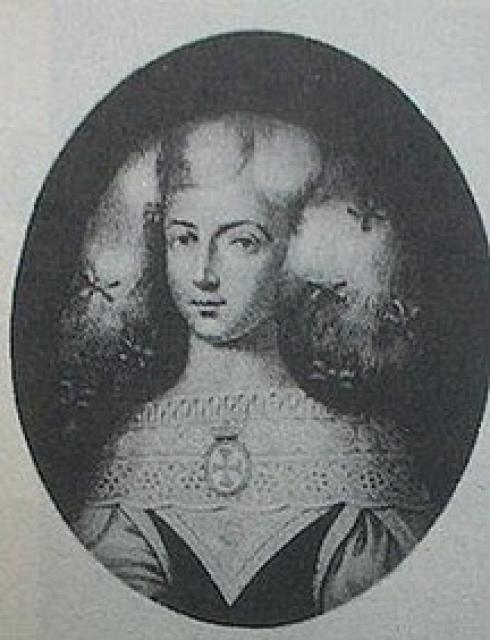
Ines De Castro
 Portugal
- Inês de Castro: A Portugese Royalty's Beloved
- Royal Beauty and Captivation
- A Royal Secret
- Royal Fears and Intrigues
- A Tragic Execution
- A Rebellious Infante
- Post-Execution Vengeance
- An Eerie Posthumous Homage
- A Shared Burial
- Children of Pedro I and Inês de Castro
Inês de Castro: A Portugese Royalty's Beloved
Inês de Castro, the darling of Portuguese royalty, lived a life intertwined with love, tragedy, and historical significance.
Royal Beauty and Captivation
Born to the Castilian noble Pedro Fernández de Castro and Adolfo Lorenzo de Valladares, Inês de Castro's beauty captivated the heart of Infante Dom Pedro, the son of King Afonso IV. She became a lady-in-waiting to Pedro's wife, Constance Manuel, while Pedro's sister, Juana, married the Castilian king, Pedro the Cruel.
A Royal Secret
After ascending to the throne in May 1357, King Pedro claimed to have secretly married Inês de Castro, following the passing of his wife, Constance. However, no documentary evidence supports this claim. Pedro fathered a legitimate heir, Fernando I, with Constance, as well as four illegitimate children, three sons and a daughter, with Inês.
Royal Fears and Intrigues
King Afonso IV and his advisors feared that Inês's sons would challenge the rights of the legitimate heir, Fernando, and plunge the country into a civil war. Moreover, Inês's brothers urged Pedro to claim the Castilian throne, threatening war with Castile, which further alarmed Afonso IV.
A Tragic Execution
Despite multiple attempts to arrange a marriage for Pedro, he adamantly refused. In response, the royal council plotted to eliminate Inês de Castro. While Pedro was away, the king confronted Inês at her palace in Coimbra, but legend has it that he was moved by her pleas for mercy and spared her life at that time. However, the king's advisors secured permission for her execution, and on January 7, 1355, Inês de Castro was beheaded.
A Rebellious Infante
Inês's execution enraged the infante, who rebelled against his father, leading to a prolonged civil war. The conflict ended with a reconciliation demanded by the people, shortly after the king's death.
Post-Execution Vengeance
Upon Afonso IV's demise in 1357, the advisors who had orchestrated Inês's execution, Pêro Coelho, Álvaro Gonçalves, and Diogo Lopes Pacheco, fled to Castile. However, Coelho and Gonçalves were extradited to Pedro I and subjected to brutal torture. The king reportedly tore out their hearts himself, one from the chest and one from the back, despite his earlier promise of pardon.
An Eerie Posthumous Homage
Legend recounts that Pedro I exhumed Inês de Castro's body, clothed it in royal garments, placed a crown upon its head, and seated it on the throne. He ordered his subjects to swear allegiance to the corpse by kissing its hand. In 1361, Inês's remains were solemnly transferred from the Monastery of Santa Clara in Coimbra to the Monastery of Alcobaça.
A Shared Burial
Don Pedro I passed away on January 18, 1367, and according to his will, he was buried opposite his beloved Inês.
Children of Pedro I and Inês de Castro
Prince Afonso (1346-1346): Died in infancy.Infanta Beatriz (1347-1381): Married Sancho Alfonso of Castile, Count of Albuquerque and Aro.
Infante João (1349-1397): Pretender to the throne during the 1383-1385 civil war.
Infante Dinis (1354-1397): Pretender to the throne during the 1383-1385 civil war.