Athanasius Kircher
 Germany
- Athanasius Kircher: A Renaissance Polymath
- Jesuit Career and Academic Pursuits
- Scientific Works
- - "Organum mathematicum":A collection of mathematical instruments.
- Philological and Antiquarian Studies
- Legacy
Athanasius Kircher: A Renaissance Polymath
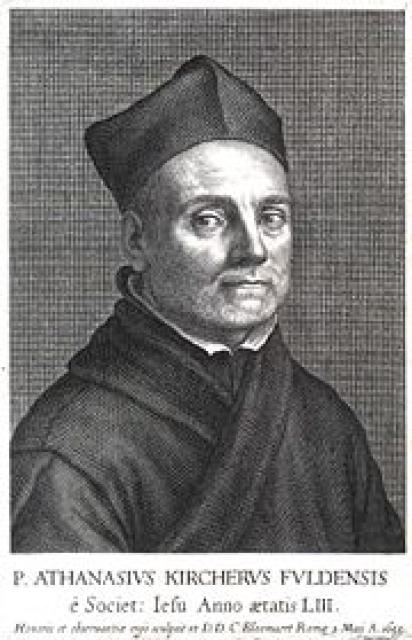
Early Life and EducationAthanasius Kircher, born on May 2, 1602, in Geisa, Germany, was a renowned Jesuit scholar and polymath. He received his early education in philosophy and oriental languages at the University of Würzburg.
Jesuit Career and Academic Pursuits
During the Thirty Years' War, Kircher joined the Jesuit order in Avignon and later moved to Rome. In Rome, he taught mathematics at the Collegio Romano, where he gained fame as one of the most learned men of his time. His prolific writings covered a wide range of subjects, including physics, natural history, linguistics, archaeology, theology, and mathematics.
Scientific Works
Kircher's scientific works include:- "Ars magna lucis et umbrae" (1646):A treatise on light and shadows.
- "Musurgia universalis" (1650):A comprehensive study of sound and music.
- "Organum mathematicum":A collection of mathematical instruments.
Museum and CollectionIn Rome, Kircher established an extensive collection of natural history specimens, antiquities, and scientific instruments. Known as the Museo Kircheriano, it is still preserved at the Collegio Romano today.
Philological and Antiquarian Studies
Kircher's philological and antiquarian works include:- "Prodromus copticus" (1636):A grammar of the Coptic language.
- "Oedipus Aegyptiacus" (1652):An attempt to decipher Egyptian hieroglyphs.
- "China monumentis illustrata" (1667):A richly illustrated encyclopedia of the Chinese empire.
Legacy
Kircher's works played a significant role in the development of Egyptology and the study of Chinese culture. His writings also influenced later thinkers, such as Sir Thomas Browne. Despite his encyclopedic knowledge, Kircher's works were often criticized for their lack of critical rigor and the presence of fantastic or erroneous information. Nevertheless, his contributions to science and scholarship remain undeniable, making him one of the most remarkable intellectuals of the Renaissance.