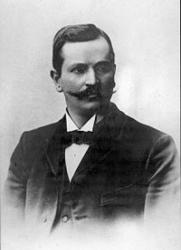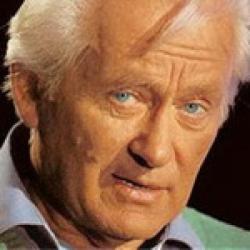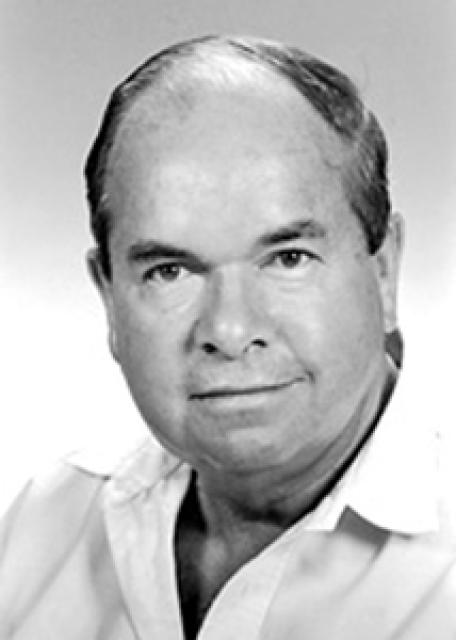
Alexey Abrikosov
 Russia
- Early Life and Education
- Scientific Career
- Academic Achievements
- Research Contributions
- Honors and Recognitions
- Lenin Prize (1966)
- Member of the National Academy of Sciences (USA) (2000)
Early Life and Education
Alexei Abrikosov was born on June 25, 1928, in Moscow, Russia. After completing high school in 1943, he initially pursued studies in electrical engineering before switching to physics in 1945. In 1948, he graduated with a degree in physics.
Scientific Career
Under the supervision of Lev Landau, Abrikosov completed his doctoral dissertation on "Thermal Diffusion in Fully and Partially Ionized Plasmas" in 1951 at the Institute for Physical Problems in Moscow. He remained at the institute and earned his Doctor of Science degree in 1955, focusing on quantum electrodynamics at high energies. In 1965, he became head of the Department of Theoretical Physics of Condensed Media at the newly established Institute for Theoretical Physics.
In 1991, Abrikosov accepted an invitation to join the Argonne National Laboratory in Illinois and relocated to the United States. He became a U.S. citizen in 1999. He held membership in prestigious institutions, including the National Academy of Sciences (USA), the Russian Academy of Sciences, the Royal Society, and the American Academy of Arts and Sciences.
Academic Achievements
Abrikosov had a distinguished academic career. He taught at Moscow State University until 1969, at Gorky University from 1970 to 1972, and at the Moscow Institute of Physics and Technology from 1976 to 1991 as chair of the Department of Theoretical Physics. In the United States, he held teaching positions at the University of Illinois at Chicago, the University of Utah, and the University of Loughborough in England.
Research Contributions
Abrikosov made significant contributions to the field of condensed matter physics. Alongside physicist Vitaly Ginzburg, he discovered a new class of superconductors called Type II superconductors. This new type exhibited properties that differed from Type I superconductors, maintaining their superconductivity even in the presence of strong magnetic fields.
Other notable research areas included the transition of hydrogen to a metallic phase in hydrogenous planets, high-energy quantum electrodynamics, and superconductivity in radio-frequency fields. He also explained the Knight shift at low temperatures and predicted the Abrikosov-Suhl resonance.
Honors and Recognitions
Abrikosov's scientific accomplishments earned him numerous accolades, including:
Nobel Prize in Physics (2003) with Vitaly Ginzburg and Anthony Leggett
Lenin Prize (1966)
Honorary Doctorate from the University of Lausanne (1975)State Prize of the USSR (1972)
Landau Prize (1989)
John Bardeen Award (1991)
Foreign Honorary Member of the American Academy of Arts and Sciences (1991)
Member of the National Academy of Sciences (USA) (2000)
Foreign Member of the Royal Society (2001)Legacy
Alexei Abrikosov's pioneering work advanced the understanding of superconductivity and condensed matter physics. His discoveries continue to inspire researchers and shape technological developments today.