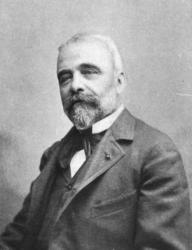
August Johann Wilhelm Neander
 Germany
- Biography of August Johann Wilhelm Neander
- Conversion to Christianity and Theological Studies
- Academic Career
- Legacy and Other Works
Biography of August Johann Wilhelm Neander
August Johann Wilhelm Neander, born David Mendel, was a German Protestant church historian who is known as the "father of modern church history". He was born on January 17, 1789, in Göttingen, into a family of Jewish merchants. His mother was related to the renowned philosopher Moses Mendelssohn.
Conversion to Christianity and Theological Studies
In 1805, Neander completed his secondary education in Hamburg. Influenced by Friedrich Schleiermacher's book "Speeches on Religion" and his interactions with Christians, Neander converted to Christianity and was baptized in the Evangelical Church of Hamburg in 1806, adopting the symbolic surname "neander" which means "new man" in Greek. He studied theology at the universities of Göttingen and Heidelberg, and in 1811, he defended his habilitation dissertation on Clement of Alexandria, which granted him the right to hold a professorship.
Academic Career
In 1812, Neander became an extraordinary professor at the University of Heidelberg, and in 1813, he was appointed as a professor of church history at the University of Berlin. The crowning achievement of Neander's life was his comprehensive work "General History of the Christian Religion and Church" (Allgemeine Geschichte der christlichen Religion und Kirche). This five-volume work, published between 1825 and 1842, with an additional sixth volume in 1852, earned him the reputation as the founder of modern evangelical church historiography. Neander examined the history of the church through the lens of spiritual development, famously stating, "Pectus est, quod theologum facit" (It is the heart that makes a theologian).
Legacy and Other Works
Neander's church history exerted a significant influence not only in Germany but also in Russia, shaping the development of church historiography. Among his other notable works are monographs on Bernard of Clairvaux, John Chrysostom, and "The Life of Jesus Christ" (Das Leben Jesu Christi). Neander passed away in Berlin on July 14, 1850.