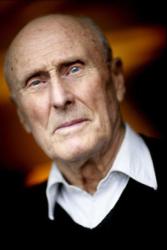
Averell Harriman
 USA
USA- Biography of William Averell Harriman
- Early Life and Business Career
- Political Career
- Later Years and Legacy
Biography of William Averell Harriman
William Averell Harriman (1891-1986) was an American diplomat and financier. He served as the US Ambassador to the Soviet Union from 1943 to 1946 and as the Secretary of Commerce from 1946 to 1948. Throughout his career, Harriman held various diplomatic and administrative positions from 1950 to 1969.
Early Life and Business Career
William Averell Harriman was born on November 15, 1891, in New York City. He was the son of Edward Henry Harriman, the founder of a major financial group. Harriman attended Groton School and Yale University, graduating in 1913.
In 1909, Harriman and his brother inherited a fortune of $600 million, allowing them to gain control over large industrial and banking corporations and double their wealth. In 1911, the Harriman brothers founded the banking firm Harriman Brothers & Co., which later became Braun Brothers & Harriman & Co. after merging with another prominent New York bank in 1931. Harriman also served as the Chairman of the Board of Directors of Union Pacific Railroad from 1918 to 1927.
During and after World War I, the Harriman brothers made significant business ventures, including a partnership with the German steamship company Hamburg-Amerika Line, the acquisition of shares in Austria's largest bank, and the development of a copper deposit in Poland.
Political Career
Harriman began his political career in the 1920s as a member of the Republican Party. However, in 1928, he switched to the Democratic Party. He served as an advisor to President Franklin D. Roosevelt on financial and industrial matters for an extended period.
In 1933, Harriman became a member of the Advisory Committee of Businessmen at the Department of Commerce, and from 1937 to 1940, he chaired this committee. In March 1941, he was sent to London for negotiations on lend-lease. In September 1941, he led the US delegation at the Moscow Conference of the Three Powers as an ambassador.
In 1942, Harriman worked on various Allied commissions in London, including the Combined Production and Resources Board. In October 1943, he was appointed as the US Ambassador to the Soviet Union. One of his key responsibilities was to keep President Roosevelt informed about any changes in the Soviet leadership's position. Harriman met frequently with Joseph Stalin, which created an impression of good relations between them. However, when Harriman requested permission from Stalin to use Soviet airfields for the support of the Warsaw Uprising in August 1944, he received a categorical refusal.
Harriman also participated in the Yalta Conference and was part of a trilateral commission tasked with creating a new Polish government. He tried to limit the representation of communists in the government but faced strong opposition from Soviet Foreign Minister Vyacheslav Molotov.
After leaving his post as the US Ambassador to the Soviet Union, Harriman served as the US Ambassador to the United Kingdom from April to September 1946. He then became the Secretary of Commerce until 1948. From 1948 to 1950, Harriman led the American administration in Europe to implement the Marshall Plan.
Later Years and Legacy
From 1950 to 1951, Harriman served as a special assistant to President Harry S. Truman on foreign policy issues. He then became the head of the Mutual Security Agency from 1951 to 1953. Harriman was also the Governor of New York from 1954 to 1958.
In 1961 and from 1965 to 1969, Harriman held diplomatic positions as a special envoy. From 1963 to 1965, he served as the Deputy Secretary of State. Between May 1968 and January 1969, Harriman led the US delegation in peace talks on Vietnam in Paris.
Throughout World War II, Harriman's financial group established close ties with banks such as First National City Bank of New York and Morgan Guaranty Trust, among others. Together, they controlled several major American corporations. By 1965, Harriman's group held assets worth over $5 billion, including $1.8 billion in banking and $3.3 billion in industry and transportation.
William Averell Harriman passed away on July 26, 1986, leaving behind a legacy as a prominent American diplomat and financier who played a significant role in US-Soviet relations during and after World War II.