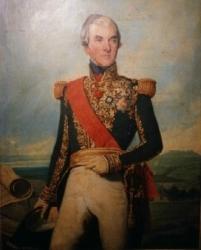
Babur
 India
India- Early Life and Dynasty
- Conquest and Establishment of the Mughal Empire
- Victories in India
- Artistic and Literary Achievements
- Death and Legacy
Early Life and Dynasty
Born on February 14, 1483, in Andijan, Zahir-ud-din Muhammad Babur (popularly known as Babur) inherited a distinguished lineage. His father, Omar Sheikh Mirza, was a direct descendant of Timur, while his mother, Qutlugh Nigar Khanum, was a descendant of Genghis Khan through her father, Yunus Khan, the ruler of Tashkent. At the tender age of 12, Babur ascended to the throne of Fergana after his father's demise in 1494.

Conquest and Establishment of the Mughal Empire
After years of internal conflicts, Babur was forced out of Fergana by the Mongol ruler Shaybani. He established a new kingdom in Afghanistan with Kabul as its capital in 1500-1505. From there, he launched his conquest of India in 1526, eventually establishing the Mughal Empire.
Victories in India
Babur's military prowess was instrumental in his successes in India. In the First Battle of Panipat in 1526, he defeated the Delhi Sultan, Ibrahim Lodi, and in 1527, he triumphed over the Rajput prince Sangram Singh at the Battle of Khanua. By 1529, he controlled vast territories, including eastern Afghanistan, Punjab, and the Ganges Valley.
Artistic and Literary Achievements
Beyond his military accomplishments, Babur was a gifted poet and writer. His poems, written in Chagatai, are renowned for their vivid imagery and aphoristic style. His magnum opus, the autobiography "Baburnama," is considered the first of its kind in historical literature. It provides a vivid account of events from 1493 to 1529.
Death and Legacy
Babur died on December 26, 1530, in Agra due to dysentery. His reign marked the beginning of the Mughal Empire, which would go on to rule India for over two centuries. Babur's transformative leadership, military prowess, and artistic brilliance have secured his place as one of the most significant figures in Indian history.