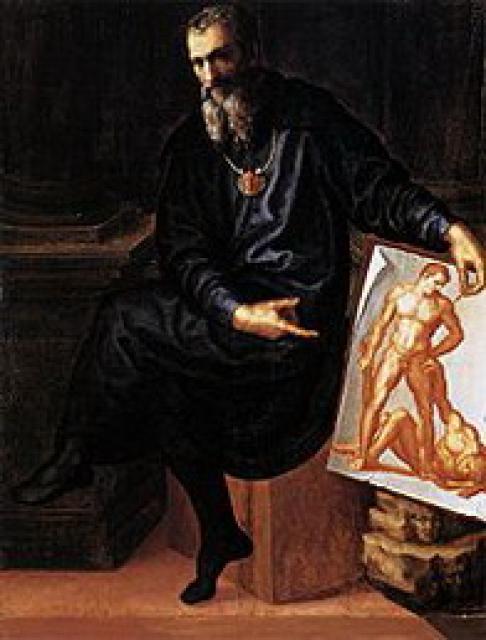
Baccio Bandinelli
 Italy
Italy- Baccio Bandinelli: Florentine Mannerist Sculptor and Artist
- Papal Patronage and Roman Influences
- Medici Commissions and Monumental Works
- Return to Florence and Rivalry with Michelangelo
- Style and Collaborations
- Legacy and Controversies
- Personal Life and Legacy
Baccio Bandinelli: Florentine Mannerist Sculptor and Artist
Early Life and TrainingBaccio Bandinelli was born into a family of jewelers in Florence, Italy. His artistic education began under the tutelage of sculptor Gian Francesco Rustici. Bandinelli also diligently studied ancient sculptures, including the renowned "Laocoön."
Papal Patronage and Roman Influences
In 1515, Bandinelli's reputation grew after creating the statue of St. Peter for the Florence Cathedral. His work attracted the attention of Pope Leo X, who invited him to Rome. In the Eternal City, Bandinelli gained access to a wealth of ancient artifacts, including the "Laocoön," which he restored and copied.
Medici Commissions and Monumental Works
Bandinelli enjoyed the patronage of the Medici family, completing several commissions for their mausoleums, including those of Pope Leo X and Clement VII in the Church of Santa Maria sopra Minerva in Rome. In 1534, his colossal sculpture "Hercules and Cacus" was unveiled in Florence's Piazza della Signoria, opposite Michelangelo's "David."
Return to Florence and Rivalry with Michelangelo
In the late 1530s, Bandinelli returned to Florence and became court artist to Duke Cosimo. He became the leading sculptor in Florence after Michelangelo's departure. Despite his admiration for Michelangelo, Bandinelli often clashed with him as a rival.
Style and Collaborations
Bandinelli's style is characterized by its dramatic and dynamic forms, often influenced by ancient sculptures. He was also an accomplished draftsman. His workshop produced several notable artists, including Bartolommeo Ammannati, Francesco Salviati, and Vincenzo de Rossi.
Legacy and Controversies
Giorgio Vasari, who worked in Bandinelli's studio, criticized his manner in his writings. Bandinelli remains a controversial figure, known both for his exceptional talent and his rivalry with Michelangelo. Scholars recognize his greatest strength in his low-relief carvings, such as the unforgettable series of "Prophets" for the choir in the Florence Cathedral.
Personal Life and Legacy
In 1530, Bandinelli falsified his lineage to gain membership in the Order of St. James. He had a son, Clemente, who also pursued a career in sculpture but died before his father in 1555. Bandinelli's influence can be seen in the work of subsequent generations of Florentine artists.