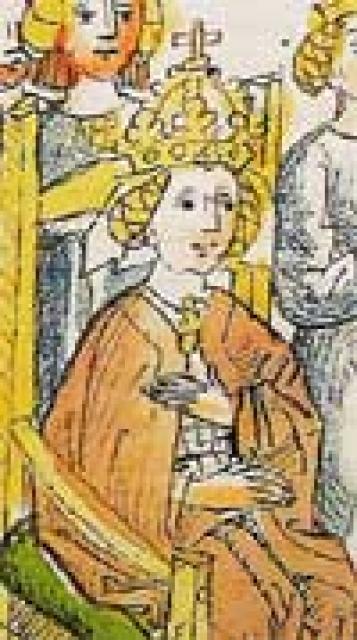
Barbara Cillei
- Barbara Cilli: A Royal Lineage
- Early Life and Family
- Marriages and Political Influence
- Royal Titles and Regency
- Personal Life and Character
- Later Years and Death
- Mitochondrial Lineage and Descendants
Barbara Cilli: A Royal Lineage
Barbara of Celje, also known as Barbara Cilli, was a significant figure in European history. Her lineage and marriages played a crucial role in shaping the political and dynastic landscapes of her time.
Early Life and Family
Barbara was born circa 1395 as the daughter of Herman II, Count of Celje, and Countess Anna of Schaunberg. Through her father, she was descended from the noble House of Celje, rulers of Slovenia. Her maternal grandparents were Henry III of Schaunberg and Ursula of Gorz.
Barbara's cousin, Anna of Celje, married King Władysław II Jagiełło of Poland in 1402. In 1405, Barbara herself wed Sigismund, King of Hungary. This union strengthened Sigismund's claim to the Hungarian throne, as Barbara's ancestry connected her to not only the Celje and Kotromanić dynasties but also the influential Croatian Šubić family.
Marriages and Political Influence
Barbara's marriage to Sigismund was a pivotal moment in her life. Sigismund, a son of Emperor Charles IV, eventually became King of Germany in 1410, King of Bohemia in 1419, and Holy Roman Emperor in 1433. Barbara's role as Sigismund's consort elevated her status and gave her significant political influence.
Barbara's father played a crucial role in the lead-up to the Battle of Grunwald (1410). He mediated between his warring sons-in-law, Sigismund and Władysław II Jagiełło, helping prevent an attack by Sigismund, who was allied with the Teutonic Order, against Jagiełło and his Slavic allies.
Royal Titles and Regency
Barbara was crowned Queen of Hungary in 1408, Queen of Germany in 1414, Holy Roman Empress in 1433, and Queen of Bohemia in 1433. As Sigismund often attended to affairs in other territories, Barbara served as regent of Hungary in his absence during the years 1412, 1414, 1416, and 1418.
Personal Life and Character
Barbara was known for her intelligence and beauty. She was well-educated and fluent in Slovene, German, and Latin. Barbara was an avowed atheist and reportedly forbade her ladies-in-waiting from praying. While her husband, Sigismund, was described as an unfaithful spouse, Barbara herself was also rumored to have had lovers.
In 1419, Sigismund banished Barbara and their daughter, Elizabeth, from the court at Órada. However, they were allowed to return in 1421.
Later Years and Death
Barbara attempted to convince the Bohemians to offer the Bohemian throne to Władysław III or Casimir, Dukes of Poland, after Sigismund's death, rather than her brother-in-law, Albert of Austria. In return, Władysław would marry her. Sigismund discovered this plot and imprisoned Barbara in Bratislava on December 5, 1437.
After Sigismund's death, Barbara was released but stripped of her possessions and banished from Hungary. She fled to Poland, where she was granted the estate of Sandomierz. In 1441, she moved to Mělník in Bohemia, where she spent her remaining years as a dowager queen. Accused of plotting against the regime, she devoted her later years to alchemy and the occult. Barbara ultimately died of the plague.
Mitochondrial Lineage and Descendants
Barbara of Celje's mitochondrial lineage remains influential today. Through her mother, she is a direct ancestor of Nicholas II of Russia. Her descendants include numerous European monarchs and members of aristocratic families.


