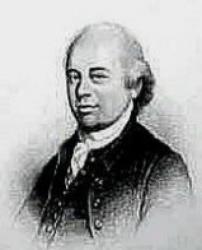
Belsazar Hacquet
 Austria
- Balthasar Hacquet: The Renowned Polymath
- Military Service and Exploration
- Professor and Scholar
- Галичина and Lwów
- Краков and Late Life
- Honors and Recognition
- Legacy and Publications
Balthasar Hacquet: The Renowned Polymath
Early Life and EducationBalthasar Hacquet, born in Le Conquet, Brittany in 1739, was a man of exceptional intellect and curiosity. He earned a doctorate in philosophy from the Jesuit college in Pont-a-Mousson before studying medicine in Montpellier and Paris. In 1764, he graduated from the University of Vienna.
Military Service and Exploration
Hacquet's military service during the Seven Years' War (1757-1763) as a military surgeon saw him wounded and captured twice. In the mid-1760s, he settled in Carinthia, Austria.
Professor and Scholar
From 1773 to 1787, Hacquet resided in Laibach (now Ljubljana), where he served as a professor of medicine. His erudite nature led him to research a wide range of fields, including geology, mineralogy, botany, chemistry, and ethnography. He became the first scientist to conduct extensive studies of the Julian Alps.
Галичина and Lwów
In 1787, Hacquet relocated to Galicia, where he worked as a professor of natural history at the University of Lwów until 1805. He played a significant role in developing geography and biology at the university. In 1786, he married in Lwów.
Краков and Late Life
After the dissolution of Lwów University in 1805, Hacquet moved to Kraków, where he continued his research. He passed away in Vienna in 1815 and was buried there.
Honors and Recognition
Hacquet was a renowned scholar who earned membership in over 20 European academies of science. He was particularly revered by Slovenians, who credited him with expanding knowledge of their language, culture, and history.
Legacy and Publications
Hacquet authored over 100 publications in botany, biology, geography, and medicine. His work significantly contributed to the understanding of the Carpathian region and its people. His legacy endures as a pioneer of mountaineering and a multifaceted scholar whose research continues to inspire.