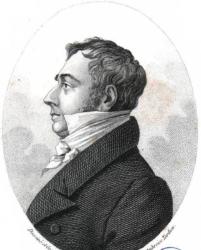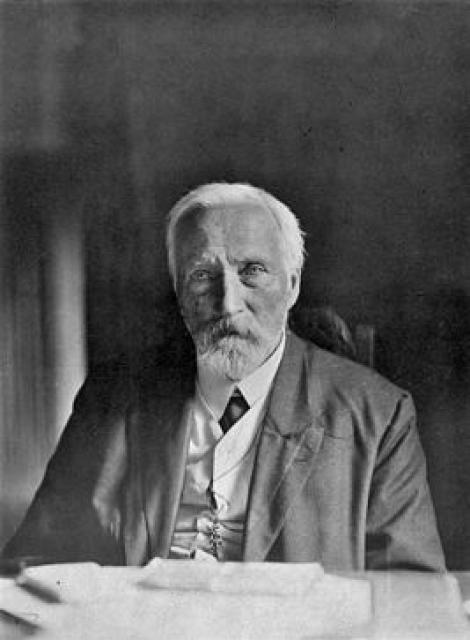
Benedict Dybowski
- Benedict Dybowski: A Renowned Explorer and Scientist
- Role in the Polish Uprising and Siberian Exile
- Exploration of Kamchatka and Emigration
- Later Career and Return to Belarus
- Final Years and Legacy
Benedict Dybowski: A Renowned Explorer and Scientist
Early Life and EducationBenedict Ivanovich Dybowski was born on April 30 (May 12), 1833, into a well-to-do family in the village of Tonwy, Minsk Governorate. Despite conflicting accounts, Dybowski himself claimed to have been born two years earlier in the nearby estate of Adamarin.
From a young age, Dybowski developed a fascination with nature, spending countless hours observing the aquatic life in his garden pond. After completing gymnasium, he enrolled in the medical faculty of Dorpat (now Tartu) University in 1853.
Role in the Polish Uprising and Siberian Exile
Dybowski played an active role in the Polish Uprising of 1863, serving as a government commissioner for the insurgents in Belarus and Lithuania. He was sentenced to death, but the intervention of German zoologists and Otto von Bismarck resulted in his sentence being commuted to 12 years of exile in Siberia.
During his Siberian exile, Dybowski conducted extensive research on Lake Baikal and the Amur River. His discoveries enriched the field of zoology with many new species. In 1877, thanks to the efforts of the St. Petersburg Academy of Sciences, he was allowed to return to his homeland.
Exploration of Kamchatka and Emigration
Eager to continue his explorations, Dybowski accepted a position as a district physician in Petropavlovsk-Kamchatsky. He meticulously studied the nature of the Commander Islands, making significant contributions to their scientific understanding.
In 1883, Dybowski emigrated to Lviv, then part of the Austro-Hungarian Empire. He became a professor and head of the zoology department at the University of Lviv, creating a renowned zoological museum.
Later Career and Return to Belarus
In 1906, Dybowski's unwavering support for Darwinian theory led to a conflict with the university administration and his forced retirement. He relocated to his sister's estate in Belarus, then part of the Russian Empire.
With the outbreak of World War I, Dybowski was arrested as an Austrian subject and sent into exile. Despite efforts from the St. Petersburg Academy of Sciences and the Imperial Geographical Society, he was briefly detained in Iркутsk and Yakuetsk. He eventually returned to his estate.
Final Years and Legacy
When German forces occupied part of Belarus, Dybowski received permission to return to Lviv. He witnessed the end of the war and the establishment of an independent Polish state. Dybowski died in Lviv in 1930 and was buried in the Lychakiv Cemetery's insurgents' necropolis.
His prolific scientific contributions include 175 published papers on zoology in Russian, Polish, and German. His dictionaries were published by the Polish Academy of Sciences in five volumes. Dybowski was elected a corresponding member of the Academy of Sciences of the USSR in 1928.