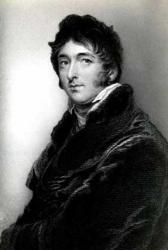
Benjamin Disraeli
 Great Britain
- Early Life and Career
- Political Ambitions
- Conservative Leadership
- Prime Ministership and Foreign Policy
- The Suez Canal Purchase and Cyprus Annexation
- The Eastern Crisis
- The Russo-Turkish War and the Congress of Berlin
- The Treaty of San Stefano and the Cyprus Convention
- The Congress of Berlin
- Disraeli and Bismarck at the Congress
Early Life and Career
Benjamin Disraeli, also known as the Earl of Beaconsfield, was born on December 21, 1804, in London to a wealthy Jewish family. His father rejected the family's traditional business pursuits and devoted himself to literature. Disraeli educated himself through voracious reading, focusing on history.
At a young age, Disraeli dabbled in stock market speculation but suffered losses. He then attempted to publish a newspaper, which also failed. A journey through the Mediterranean and the Middle East helped him recover from his financial troubles.
Political Ambitions
In his early 20s, Disraeli wrote the novel "Vivian Grey," which brought him acclaim. He subsequently wrote several novels that garnered popular appeal. Disraeli set a goal: to become Prime Minister of Great Britain by the age of 30.
It took five attempts for him to secure a seat in the House of Commons from the Conservative Party (1837). By this time, Disraeli's finances were in disarray.
Conservative Leadership
In 1852, Disraeli became Chancellor of the Exchequer in Lord Derby's cabinet and Leader of the House of Commons. However, the Tories soon found themselves in opposition. Disraeli led the Conservative Party with Edward Stanley, 14th Earl of Derby, for an extended period.
When Derby retired in 1868 due to old age, Disraeli became Prime Minister in March. However, the Liberals won the elections in December, and he returned to opposition.
Disraeli energetically reorganized the Conservative Party, formulating a "Tory Democracy" program that advocated for "a firm foreign policy, especially towards Russia" and the assertion of "England's greatness." He also established an efficient structure and a clear mechanism for the party.
Prime Ministership and Foreign Policy
In 1874, the Conservatives gained a majority in the House of Commons, and Disraeli became Prime Minister. He focused on colonial and foreign policy issues, working to expand the Empire.
"This is not a question which can be treated as unimportant," he declared in his famous Crystal Palace speech in 1872. "It is whether you will be content to be a comfortable England, modelled and moulded upon continental principles, and to wait for that inevitable fate... or whether you will be a great country—an Imperial country—a country where your sons when they rise, rise to the highest positions, and win for themselves not merely the respect of their fellow countrymen, but the respect of the world."
Within a year, Disraeli had emerged as the leader of the British nation. The secret to his extraordinary career, as noted by the historian David Lee, was that "no one in the government, and hardly anyone in England, was as clear-sighted as Disraeli in defining ends and especially in realizing them."
Lee also characterized Disraeli's policy in Eastern affairs, as well as in any foreign affairs, as one of "upholding British interests if possible by peaceful means, but if necessary by threatening war."
The Suez Canal Purchase and Cyprus Annexation
In November 1875, Europe learned of a secret deal that had far-reaching consequences. The British government had purchased, for a pittance, all 40% of the Suez Canal shares owned by Ismail Pasha, Egypt's penultimate Khedive.
Disraeli had cleverly exploited the Khedive's financial predicament to bring the Suez Canal, a crucial international waterway, under his control. The Russian ambassador to London, Count Pyotr Shuvalov, saw this as the beginning of a new era in British policy: one of active participation in the division of the Ottoman Empire and further penetration into the Middle East.
Disraeli secured another stake in the British Empire's expansion. In April 1876, Queen Victoria was proclaimed Empress of India. The Queen reciprocated, conferring the title Earl of Beaconsfield and a peerage of the United Kingdom on Disraeli in August.
Disraeli saw British interests not only in Egypt but also in Asia Minor, the Persian Gulf, the Red Sea, Syria, Lebanon, Mesopotamia, and the Tigris and Euphrates River valleys. To control markets in these regions, he believed Cyprus, which belonged to the Ottoman Empire, should become a British base.
The Eastern Crisis
In July 1875, Muslims in Bosnia and Herzegovina rebelled against Ottoman rule. The Turks' brutal suppression of the uprising sparked outrage in Europe. In early 1876, the League of Three Emperors issued the Berlin Memorandum, warning Turkey against continued repression.
The British government promptly rejected the Berlin Memorandum. Disraeli told Shuvalov, "England is treated as if we were Montenegro or Bosnia." To his regular correspondent Lady Bradford, he wrote, "There is no balance and if we do not do our utmost to bring about common action with the three Northern powers they may act without us which for a state like England is intolerable."
The Prime Minister interpreted the Berlin Memorandum as the first step toward the partition of the Ottoman Empire without British participation. Disraeli, who favored "the maintenance of the independence and integrity" of the Ottoman Empire, proposed a conference "founded on the territorial status quo."
The Russo-Turkish War and the Congress of Berlin
In the tradition of Lord Palmerston, Disraeli decided to flex Britain's muscles. He ordered the Royal Navy into Besika Bay, located at the entrance of the Dardanelles, an act that had preceded the Crimean War. Disraeli was ecstatic about his stratagem. He believed that the League of Three Emperors "has in fact become as much a thing of the past as the triumvirate was in ancient Rome."
Disraeli suggested to Shuvalov that the Eastern Question could be resolved without Austria-Hungary. Anglo-Russian talks continued throughout June. However, it became clear that Disraeli insisted on Russia abandoning its support for the Balkan Slavs and allowing Turkey to crush the rebellion. Possibly, Disraeli's aim was to bring relations between Russia and Austria-Hungary to the brink of rupture, which he believed he had initiated by rejecting the Berlin Memorandum.
Disraeli faced intense pressure at home. Turkish atrocities had turned British public opinion against them, and Gladstone denounced Disraeli's immoral policy. The Prime Minister could not ignore this.
The Treaty of San Stefano and the Cyprus Convention
In November 1876, Britain's Foreign Secretary, Lord Derby, proposed a European conference in Istanbul to compel Turkey to implement reforms. This proposal was made against Disraeli's wishes, but he eventually approved it after failing to secure an alliance with Austria-Hungary against Russia. The conference yielded no concrete results. Turkey dismissed all reforms by a simple expedient: proclaiming a constitution guaranteeing liberty to all its peoples.
However, Disraeli had long understood that the partition of the Ottoman Empire was inevitable and sought to exploit it for maximum gain. He signed the London Protocol of 1877, joining the three Northern Courts in calling on Turkey to end the Balkan massacre. However, the Sultan, confident that Disraeli was on his side regardless of the formal demands, rejected this document as well. Russia responded by declaring war.
It seemed that Russia had achieved a diplomatic victory. Not only Austria-Hungary and Germany but also France supported it, not to mention significant public support in Britain.
Disraeli, however, played a cunning game based on the following calculations. Turkey would stubbornly reject all demands from Russia and the powers. Eventually, Russia would declare war on the Ottoman Empire. Once both sides had exhausted themselves, England would threaten the Tsar with a European coalition and make two or three military demonstrations—and the Russians would be forced to withdraw. Turkey would have to pay England for "saving the capital and the whole empire at the price demanded." Remarkably, this plan succeeded.
Throughout the Russo-Turkish War, England pursued its policy consistently. Disraeli postured as an "advocate of decisive action," demanding increased military expenditure from Parliament, constantly claiming in the House of Lords and at Cabinet meetings the threat to Istanbul, the Suez Canal, and "the road to India," and pretending that England was on the verge of hostilities.
The Congress of Berlin
At this juncture, Ignatiev shocked Europe by announcing the terms of the Treaty of San Stefano (1878) with Turkey, which created a "Greater Bulgaria." The San Stefano Treaty provided for Russian control of the Straits, which was unacceptable to the United Kingdom, and Russian control over the Balkan Slavs, which was unacceptable to Austria. Both Britain and Austria-Hungary declared that they would not recognize the treaty and called for a congress to discuss the Balkan question with all interested powers. For Russia, this meant the threat of a return to the Crimean War coalition.
The British Foreign Office's entire energy was devoted to securing a "compensation," which they believed England deserved for its neutrality in the Russo-Turkish War.
The congress was scheduled for June 13, 1878. Before it began, however, England and Russia resolved the key issues in an agreement signed by Lord Salisbury and the Russian Foreign Minister Shuvalov on May 30. In another separate agreement, England promised Austria-Hungary that it would support Austrian occupation of Bosnia and Herzegovina.
Most importantly, on June 4, British diplomats managed to conclude a secret convention with Turkey to hand over Cyprus to England.
Disraeli and Bismarck at the Congress
For the first time in British history, the Prime Minister and the Foreign Secretary (Disraeli and Salisbury) traveled to a congress outside the British Isles together, as Disraeli was unwilling to entrust the conclusion of such major diplomatic deals to Salisbury alone. Lord Beaconsfield also addressed the congress in English for the first time, instead of in the diplomatic language