Bernardo Daddi
 Italy
Italy- Biography of Bernardo Daddi
- Early Life and Training
- Artistic Career
- Style and Influence
- Later Years and Death
Biography of Bernardo Daddi
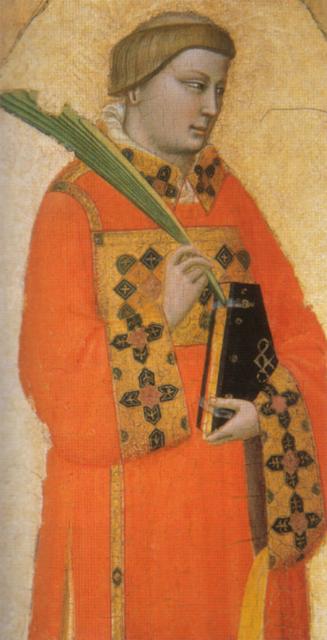
Bernardo Daddi (Daddi, Bernardo, c. 1280-1348) was an Italian painter of the first half of the 14th century. He was known for his religious-themed paintings and created several altarpieces for churches in Italy. Some of his notable works include the triptych of the Madonna with Child and Saints Matthew and Nicholas (1328) in the Uffizi, the Madonna with Child in Orsanmichele in Florence (1346-1347), and the triptych of the Virgin with Child on the Throne, Nativity, and Crucifixion (1333).
Early Life and Training
Bernardo Daddi was a follower of Giotto and worked in his workshop alongside other artists such as Taddeo Gaddi, Stefano Fiorentino, and Mazzo di Banco. The exact date of Daddi's birth remains unknown, but his name is first mentioned in documents in 1312.
Artistic Career
In 1319, Daddi joined the guild of physicians and apothecaries. His first dated work is a triptych from 1328, which is now housed in the Uffizi Gallery. During this period, he painted several frescoes in the Santa Croce church, including the Martyrdom of Saint Lawrence and the Martyrdom of Saint Stephen in the Pulci-Berardi Chapel. Daddi became one of the most renowned and wealthy Florentine painters. The Italian poet and writer Franco Sacchetti referred to him as one of the best followers of Giotto.
Style and Influence
Daddi's painting style was refined and aristocratic, which appealed to the bourgeoisie, who were often the patrons of his paintings and frescoes. He was influenced by the Sienese school, particularly Pietro Lorenzetti. However, Daddi used more complex colors, especially in his later works. "The Coronation of Mary" is considered one of Daddi's finest works and is praised not only by his contemporaries but also by subsequent followers of Giotto. The painting is poetic and elegant, and it was created for the Santa Maria Novella church in Florence.
Later Years and Death
Daddi's last documented work dates back to 1347, and the following year, he contracted the plague and passed away.