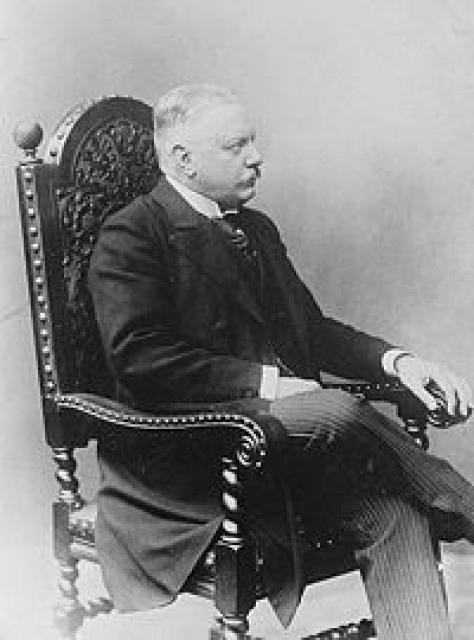
Bernhard Bulow
 Germany
- Bernhard von Bülow: German Statesman and Chancellor
- Military and Diplomatic Career
- State Secretary for Foreign Affairs
- Chancellor and Prime Minister
- Resignation and Later Career
- Legacy
Bernhard von Bülow: German Statesman and Chancellor
Early Life and FamilyBernhard von Bülow was born in Klein Flottbek, Holstein, to a family of prominent diplomats and politicians. His father, Bernhard Ernst von Bülow, held government positions in Denmark and Germany. His uncle, Heinrich von Bülow, was Prussia's ambassador to England from 1827 to 1840. His brother, Major General Karl Ulrich von Bülow, served as a cavalry officer in World War I.
Military and Diplomatic Career
After participating in the Franco-Prussian War, Bülow entered the Prussian civil service and later the diplomatic service. He served as an attaché at the German embassy in Paris in 1876 and as its second secretary in 1880. In 1884, he was appointed first secretary of the embassy in St. Petersburg and later served as envoy to Bucharest in 1888 and ambassador to Rome in 1894.
State Secretary for Foreign Affairs
In 1897, following Adolf Marschall von Bieberstein's resignation, Bülow was appointed State Secretary for Foreign Affairs, a post his father had also held from 1873 to 1875. He contributed to Germany's colonial expansion by securing the Caroline Islands in 1899, which earned him the title of Count.
Chancellor and Prime Minister
After Prince Hohenlohe retired in 1900, Bülow assumed the positions of Chancellor and Prime Minister of Prussia. As Chancellor, he defended Germany's intervention policy in China in the Reichstag and continued to advocate for German foreign policy interests in parliament. In 1905, he was awarded the title of Prince (Fürst).
Resignation and Later Career
In 1909, Bülow resigned after the Reichstag rejected his government's proposed budget. From 1914 to 1915, he served as ambassador to Italy but was unable to secure its support for Germany or its neutrality. Many Reichstag leaders hoped for his return as Chancellor after Theobald von Bethmann-Hollweg's resignation in 1917.
Legacy
Prince von Bülow died on October 28, 1929. He is remembered as a skilled diplomat who played a significant role in shaping Germany's foreign policy at the turn of the 20th century.


