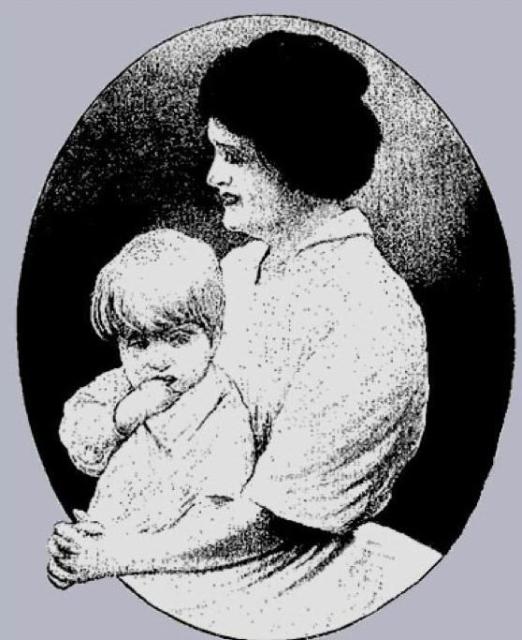
Bertha Gifford
 USA
- A Rural Life in Missouri
- The Investigation
- Trial and Institutionalization
- Legacy and Unanswered Questions
Bertha Gifford was a Missouri farmwife whose reputation as a helpful neighbor and self-taught nurse later became central to one of the state’s most notorious poisoning cases. In 1928, prosecutors accused her of murdering a man by arsenic poisoning, while investigators examined several other suspicious deaths in the surrounding community. A jury found her not guilty by reason of insanity, and she remained in a state hospital until her death. The label of “serial killer” has followed her in popular accounts, although the number of deaths attributed to her remains disputed.
A Rural Life in Missouri
Born Bertha Alice Williams in Missouri in 1872, she grew up in the rural community of Morse Mill. She married Henry Graham in 1894. After his death, she married Eugene “Gene” Gifford in 1907, and the couple moved to Catawissa, where Gene worked as a farmer.
In Catawissa, Gifford became known for tending to neighbors who were ill. She had no formal medical training, but people sought her help as a country nurse. She prepared remedies, cared for patients in their homes, and sometimes brought them to the Gifford household, where she could watch over them. In a community with limited medical access, this work made her a trusted presence.
The pattern that later attracted attention unfolded over many years. Several people who had received care from Gifford died, including children. At the time, the deaths were generally attributed to illness, and few were formally investigated. Later accounts differ about which deaths were suspicious and how many could be connected to her.
The Investigation
Suspicion intensified after Edward “Ed” Brinley, a neighbor who had been staying at the Gifford home, died in 1927. His body was exhumed, and testing found arsenic. Investigators also examined the deaths of two boys, Elmer and Lloyd Schamel, whose remains were reported to contain arsenic. The findings led authorities to take a closer look at the deaths of people who had been treated or cared for by Gifford.
Reports from the time described Gifford as having purchased arsenic at local pharmacies. Arsenic was commonly used in the period for rat poison and other purposes, so a purchase alone did not prove a crime. The exhumations and forensic findings became the more consequential evidence in the investigation. Later historians have emphasized that medical knowledge and forensic methods of the 1920s were limited, and that retrospective claims about additional victims often rest on incomplete records or local recollections.
Trial and Institutionalization
Gifford’s trial began in Union, Missouri, in November 1928. The case centered on the death of Brinley. Prosecutors argued that he had been poisoned, while questions about her mental state shaped the proceedings. The jury found her not guilty by reason of insanity. The verdict did not establish criminal responsibility for the broader list of deaths that later appeared in newspaper and popular retellings.
After the trial, Gifford was committed to Missouri State Hospital No. 4 in Farmington. She remained there for the rest of her life, under state custody rather than returning to the Catawissa community. She died in the hospital on August 20, 1951.
Legacy and Unanswered Questions
Gifford’s story has endured because it combines a familiar rural role, caring for sick neighbors, with the disturbing possibility that the person offering help may have caused harm. Her case has inspired books, local histories, podcasts, and renewed historical investigation. The evidence supports a serious arsenic-poisoning case and an insanity verdict, but the exact number of victims and the circumstances of many deaths remain unresolved.
That uncertainty matters to her legacy. The term “serial killer” is often applied to Gifford, yet she was tried in connection with a single death and was not convicted of murder. Her story is best understood as both a criminal case and a caution about how later narratives can turn suspicion into certainty. The full record remains incomplete, leaving historians to distinguish what was tested in court from what was added by rumor, memory, and later retelling.


