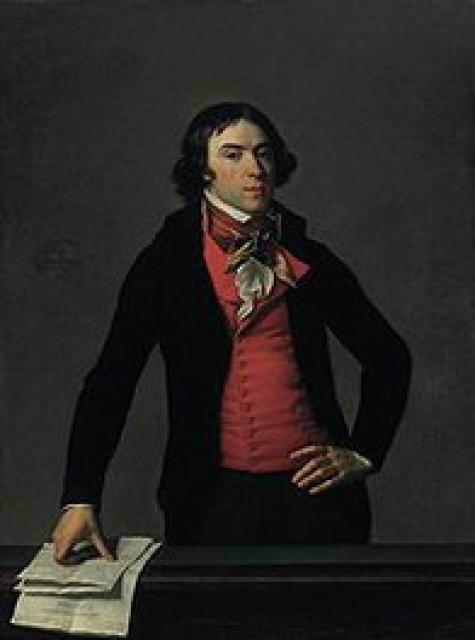
Bertrand Barere
 France
- Bertrand Barère: A Politician Amidst the French Revolution
- Early Career and Entry into Politics
- Influence in the National Convention
- Moderate Stance Amidst Factionalism
- Membership in the Committee of Public Safety
- Denunciation of Robespierre
- Later Years and Legacy
Bertrand Barère: A Politician Amidst the French Revolution
Bertrand Barère, a French politician and lawyer, played a significant role during the tumultuous years of the French Revolution. He served as a deputy in both the National Assembly and the National Convention, leaving an indelible mark on the course of history.
Early Career and Entry into Politics
Born in Tarbes, France, Barère studied law and was called to the bar in 1785. His oratorical skills and persuasive charm soon propelled him into politics, and in 1789 he was elected as a deputy to the Estates General.
Influence in the National Convention
Barère's eloquence and diplomatic demeanor quickly garnered him recognition in the National Convention, where he became a major figure. In 1792, he presided over the trial of King Louis XVI, which culminated in the monarch's execution.
Moderate Stance Amidst Factionalism
As the struggle between the Montagnards and the Girondists intensified, Barère attempted to serve as a mediator, advocating for a moderate stance. However, as the Girondists lost power, he aligned himself with the dominant Mountain party.
Membership in the Committee of Public Safety
Barère served twice as a member of the Committee of Public Safety, responsible for foreign policy and public education. Initially collaborating with Georges Danton, he later shifted his allegiance to Maximilien Robespierre.
Denunciation of Robespierre
In the days leading up to the Thermidorian Reaction, Barère broke ranks with Robespierre, denouncing his dictatorship. Despite his role in Robespierre's downfall, he was accused of complicity and sentenced to exile.
Later Years and Legacy
Barère's sentence was not carried out, and following the rise of Napoleon Bonaparte, he was granted amnesty. He retired from politics and lived in obscurity until his death in 1841.
Bertrand Barère remains a controversial figure in French history. His political maneuvers and alliances have been scrutinized, yet his oratorical skills and influence during the Revolutionary era cannot be denied.